About 274 minutes
Paul Prescott's Charge — Story, Setting & Ideas
Fantasy Juvenile Worlds
62,833 recorded words. 25 minutes difference from this book's estimate.
View Gutenberg source #293
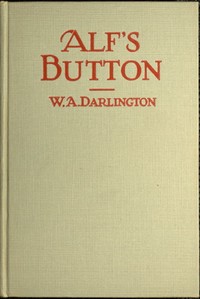
For Alf's Button — Context and Discussion, the stored edition analysis reports 68,724 words, 4 hr 59 min estimated reading time, and 7 detected text sections.
The text analysis averages about 13.3 words per sentence, while the detected sections provide another way to judge how the source is divided.
Project Gutenberg metadata also associates the work with “Fantasy fiction,” connecting these edition facts with the source record’s subject description.
Explore this collection
These alternatives are selected using recorded categories and estimated reading time.
About 274 minutes
Fantasy Juvenile Worlds
62,833 recorded words. 25 minutes difference from this book's estimate.
View Gutenberg source #293About 342 minutes
Fantasy Juvenile Worlds
78,451 recorded words. 43 minutes difference from this book's estimate.
View Gutenberg source #2151About 254 minutes
Fantasy Juvenile Worlds
58,219 recorded words. 45 minutes difference from this book's estimate.
View Gutenberg source #778Search stored excerpts and compare books → Choose by your preferences →
Choices use stored catalog measurements. Estimates vary with reading speed. A shared category is a catalog label, not a claim that two books have the same argument or literary quality.
Search reads excerpt text stored with this catalog and links to its associated Gutenberg record. The connection is stored in the site database; this tool does not recheck that every excerpt is word-for-word identical to that external record. Excerpt search does not cover every chapter and does not verify historical publication dates.
Catalog snapshot checked: 2026-09-25. Coverage: 95 public books, 95 available source excerpts.
Read the complete public-domain text at its original source.
Read on Project GutenbergAlf Higgins, a runner in the 5th Battalion, discovers that one of his tunic buttons is actually Aladdin's lamp. When he cleans it, a genie named Eustace appears—a being who can grant wishes but consistently misinterprets them. The narrative shifts rapidly from the front-line trenches to a dugout furnished with diamond-studded coverlets, then to a village where the arrival of mysterious new residents at the Manor stirs gossip about German spies. This movement between settings is not merely scenic; it drives the comedy and conflict, as each location imposes its own rules on the magic.
The opening chapter grounds the story in the mundane routines of war: Captain Richards gives orders about taking over the front line, and Alf is a runner. But the discovery of the button—and the genie Eustace—instantly transports the reader to a world where a soldier can sit on a diamond-studded coverlet. The contrast is stark and deliberate. Darlington uses the cramped, gritty reality of the trenches as a foil for the absurd opulence that Eustace produces. Alf’s reaction is not wonder but irritation: “It’s just Eustace. ’E’s mucked it again.” The magic is never allowed to become majestic; it remains stubbornly domestic and faulty.
The genie’s inability to grasp human desires is a recurring structural device. When Alf asks for ordinary clothes, Eustace produces magnificent suits but no “pot” hat or spats. Alf’s exasperated cry—“Pity ’e can’t never get nothing right the first time”—becomes a refrain. This pattern of wish and misinterpretation drives the plot forward, forcing Alf to repeatedly summon Eustace to correct earlier blunders. The humor lies in the gap between intention and outcome, and the narrative rhythm depends on these cycles of summoning, failure, and re-summoning.
In Chapter XI, the scene shifts to the vicarage, where Mrs. Davies pressures her husband to investigate the Manor’s new occupants. The dialogue reveals a community buzzing with rumor: no letters, no local tradesmen, and a boy claiming to have seen “black men” in the garden. The vicar’s mild protests—“my talents do not lie very much in the direction of private detection”—underscore the contrast between his reluctance and his wife’s determination. This section introduces a second kind of movement: the spread of gossip as a force that propels characters into action, independent of the magical plot.
The foreword establishes a mock-scholarly tone, speculating on the fate of Aladdin’s lamp after his death. Darlington claims that the lamp was melted down and reissued as buttons for soldiers’ tunics—a premise that blends the fantastical with the bureaucratic. This framing colors everything that follows, inviting the reader to treat the absurd events as a plausible consequence of government efficiency. The foreword also mentions that some of Alf’s adventures previously appeared in The Passing Show, hinting at the episodic structure that the novel retains.
The novel’s structure depends on abrupt transitions between the magical and the mundane, the trench and the drawing-room. Readers will find that the comedy emerges not from the wishes themselves but from the friction between Eustace’s literal-mindedness and Alf’s exasperation. Pay attention to how Darlington uses the village gossip subplot to ground the fantasy in a recognizable social world—and how the button’s origin story in the foreword sets up a chain of cause and effect that the rest of the book plays out.
I remember hunkering down with Alf's Button in a damp tent, the absurdity of a genie in the mud oddly comforting. It reminded me of that other story where an enchanted island held its own quiet magic beneath everyday worries. There’s a shared warmth in such escapes. The Treasure of the Isle of Mist — Inside the Classic gave me that same feeling of hushed wonder long ago.
Use these questions to collect your thoughts before moving on.