Dick Sands, the Boy Captain - Jules Verne

(19 User reviews)   3176
By Nicholas Ortiz Posted on Jan 27, 2026
In Category - Law & Society
Jules Verne Jules Verne
English
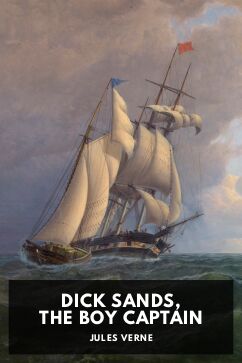
Hey, have you ever read a book where a 15-year-old suddenly has to captain a ship across the ocean? That's the wild setup of Jules Verne's 'Dick Sands, the Boy Captain'. Imagine being a teenage apprentice sailor, and in one terrible moment, you lose your entire crew. Now you're in charge of a ship full of passengers, including a mother and her young son, with no idea how to navigate the vast Pacific. It's not just about storms and sharks, though. There's this creeping sense that something is very wrong on this voyage. The crew you've picked up seems... off. And the land you finally reach? It doesn't look anything like South America. This book is a total page-turner. It's less about fancy technology (though there's a cool ship) and more about pure survival, courage, and a massive mystery. You're constantly wondering if Dick can pull it off and what's really going on. If you want an adventure that starts with a bang and never lets up, grab this one.
Share

Read "Dick Sands, the Boy Captain - Jules Verne" Online

This book is available in the public domain. Start reading the digital edition below.

START READING FULL BOOK
Instant Access    Mobile Friendly

Book Preview

A short preview of the book’s content is shown below to give you an idea of its style and themes.

available seaman had long since been carried off to the fisheries. Finding therefore that all hope of making good the deficiency in his cargo must be resigned, he was on the point of leaving Auckland, alone with his crew, when he was met by a request with which he felt himself bound to comply. It had chanced that James Weldon, on one of those journeys which were necessitated by the nature of his business, had brought with him his wife, his son Jack, a child of five years of age, and a relation of the family who was generally known by the name of Cousin Benedict. Weldon had of course intended that his family should accompany him on his return home to San Francisco; but little Jack was taken so seriously ill, that his father, whose affairs demanded his immediate return, was obliged to leave him behind at Auckland with his wife and Cousin Benedict. Three months had passed away, little Jack was convalescent, and Mrs. Weldon, weary of her long separation from her husband, was anxious to get home as soon as possible. Her readiest way of reaching San Francisco was to cross to Australia, and thence to take a passage in one of the vessels of the "Golden Age" Company, which run between Melbourne and the Isthmus of Panama: on arriving in Panama she would have to wait the departure of the next American steamer of the line which maintains a regular communication between the Isthmus and California. This route, however, involved many stoppages and changes, such as are always disagreeable and inconvenient for women and children, and Mrs. Weldon was hesitating whether she should encounter the journey, when she heard that her husband's vessel, the "Pilgrim," had arrived at Auckland. Hastening to Captain Hull, she begged him to take her with her little boy, Cousin Benedict, and Nan, an old negress who had been her attendant from her childhood, on board the "Pilgrim," and to convey them to San Francisco direct. "Was it not over hazardous," asked the captain, "to venture upon a voyage of between 5000 and 6000 miles in so small a sailing-vessel?" But Mrs. Weldon urged her request, and Captain Hull, confident in the sea-going qualities of his craft, and anticipating at this season nothing but fair weather on either side of the equator, gave his consent. In order to provide as far as possible for the comfort of the lady during a voyage that must occupy from forty to fifty days, the captain placed his own cabin at her entire disposal. Everything promised well for a prosperous voyage. The only hindrance that could be foreseen arose from the circumstance that the "Pilgrim" would have to put in at Valparaiso for the purpose of unlading; but that business once accomplished, she would continue her way along the American coast with the assistance of the land breezes, which ordinarily make the proximity of those shores such agreeable quarters for sailing. Mrs. Weldon herself had accompanied her husband in so many voyages, that she was quite inured to all the makeshifts of a seafaring life, and was conscious of no misgiving in embarking upon a vessel of such small tonnage. She was a brave, high-spirited woman of about thirty years of age, in the enjoyment of excellent health, and for her the sea had no terrors. Aware that Captain Hull was an experienced man, in whom her husband had the utmost confidence, and knowing that his ship was a substantial craft, registered as one of the best of the American whalers, so far from entertaining any...

This is a limited preview. Download the book to read the full content.

Jules Verne is famous for taking us to the center of the earth and under the sea, but in 'Dick Sands', he crafts a gripping survival story that feels surprisingly personal. It starts on a whaling ship, the Pilgrim. When tragedy strikes and the experienced crew is lost, 15-year-old apprentice Dick Sands has no choice but to take command. His passengers are relying on him: Mrs. Weldon, her little son Jack, and their loyal cousin Benedict. They're trying to get back to America.

The Story

Dick is brave and resourceful, but he's in over his head. He manages to recruit five survivors from a shipwreck to help man the ship. The problem? These new sailors, led by the shady Negoro, are not who they seem. As Dick struggles with navigation, strange things keep happening. The journey feels wrong. When they finally sight land, their relief is short-lived. This isn't the coast of South America. Through a cruel trick with the ship's instruments, Negoro has stranded them in the heart of Africa. Suddenly, Dick's fight isn't against the ocean, but against the dangers of an unknown continent—wild animals, harsh terrain, and the grim threat of the slave trade, which is still active. The boy captain must now lead his group on a desperate trek across Africa to safety.

Why You Should Read It

This book hooked me because of Dick himself. He's not a superhero. He's a scared kid trying to act like an adult, making mistakes but never giving up. His growth is the heart of the story. Verne also doesn't shy away from the darker side of adventure. The setting of Africa lets him critique the horrors of slavery, which adds a serious, powerful layer to the action. It's more than just a jungle adventure; it's about fighting injustice.

Final Verdict

Perfect for anyone who loves a classic adventure with real stakes. If you enjoyed the survival spirit of 'The Swiss Family Robinson' or the journey-driven plot of 'Around the World in Eighty Days', you'll feel right at home here. It's also a great pick for younger readers ready for a more mature story, or for adults who want a fast-paced, classic tale with a genuinely admirable young hero at its center. Just be ready for a few tense moments—Verne doesn't pull his punches.


⚖️ License Information

No rights are reserved for this publication. Use this text in your own projects freely.

John Perez
6 months ago

From the very first page, the atmosphere created is totally immersive. I couldn't put it down.

Ethan Taylor
1 month ago

After hearing about this author multiple times, the storytelling feels authentic and emotionally grounded. I would gladly recommend this title.

James Torres
1 year ago

Honestly, the depth of research presented here is truly commendable. Absolutely essential reading.

Sandra Johnson
1 year ago

As someone who reads a lot, it provides a comprehensive overview perfect for everyone. I will read more from this author.

Oliver Nguyen
7 months ago

Very helpful, thanks.

5
5 out of 5 (19 User reviews )

Add a Review

Your Rating *
There are no comments for this eBook.
You must log in to post a comment.
Log in


Related eBooks