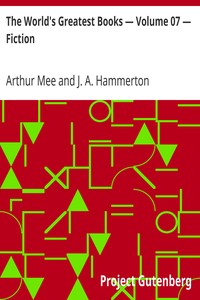
The World's Greatest Books — Volume 07 — Fiction by Arthur Mee and J. A. Hammerton
Let's be clear from the start: this isn't a novel. The World's Greatest Books — Volume 07 — Fiction is exactly what the title says. Published in 1910 as part of a massive multi-volume set, it's a curated anthology. Editors Arthur Mee and J.A. Hammerton gathered what they, and the literary consensus of their time, considered the absolute pinnacle of fiction. The book contains excerpts and summaries from longer works, alongside some complete short stories and novellas. You'll find pieces by giants like Charles Dickens, Victor Hugo, and Sir Walter Scott, but you'll also encounter names that have since faded from common memory. The experience is like attending a literary party hosted in 1910, where the guest list reveals who was in fashion and who was considered essential reading.
The Story
There's no single plot. Instead, you journey through a landscape of early 20th-century taste. One page might drop you into the social satire of Thackeray's Vanity Fair, the next into the romantic highlands of a now-obscure Scottish novelist. The editors provide commentary, framing each selection and explaining its significance to their audience. Reading it feels like having a very earnest, well-meaning guide from the past showing you his prized possessions. The 'story' is the act of discovery itself—seeing which themes (adventure, morality, domestic drama) were prized, and noticing which voices and perspectives are conspicuously absent by today's standards.
Why You Should Read It
I loved this for the historical perspective. It made me question my own assumptions about what makes a book 'great.' Is it lasting popularity? Artistic innovation? Moral instruction? This volume shows that a century ago, the answers were different. The commentary is often charmingly old-fashioned, praising 'manly vigor' and 'noble sentiment.' It's a direct line to the mindset of the past. You're not just reading literature; you're reading about literature through a historical lens. It's surprisingly humbling and thought-provoking.
Final Verdict
This is a niche but wonderful read for curious book lovers. It's perfect for history buffs, fans of classic literature who want context, or anyone who enjoys 'book-about-books.' Don't come looking for a page-turning narrative. Come looking for a conversation with the past. It's a slow, reflective experience best enjoyed a few entries at a time, ideally with a cup of tea and a modern bookshelf nearby for comparison. A truly unique artifact for the patient and curious reader.
Legal analysis indicates this work is in the public domain. Access is open to everyone around the world.
Linda Rodriguez
1 year agoThe formatting on this digital edition is flawless.
Logan Harris
10 months agoI didn't expect much, but the pacing is just right, keeping you engaged. A true masterpiece.
Linda Lewis
7 months agoRecommended.

Thomas Wilson
3 months agoSimply put, the clarity of the writing makes this accessible. Worth every second.