
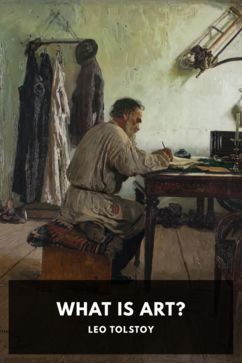
What Is Art? - Leo Tolstoy
Read "What Is Art? - Leo Tolstoy" Online
This book is available in the public domain. Start reading the digital edition below.
START READING FULL BOOKBook Preview
A short preview of the book’s content is shown below to give you an idea of its style and themes.
Forget everything you think you know about art galleries, concert halls, and literature classes. In 'What Is Art?', Leo Tolstoy isn't giving a dry lecture; he's starting a bar fight about culture. Written later in his life, this is the work of a man deeply frustrated with the art of his time, which he saw as an exclusive club for the rich and educated, completely disconnected from ordinary people.
The Story
There isn't a plot with characters, but there's a powerful argument. Tolstoy systematically dismantles common definitions of art as 'beauty' or 'pleasure.' He thinks those ideas are vague and selfish. Instead, he builds his own case: real art is a form of communication. An artist feels a strong emotion, and through their work—a painting, a song, a story—they 'infect' the viewer or reader with that same feeling. If it doesn't create that shared emotional bridge, it fails as art. He uses this rule to judge everything. He famously dismisses his own later novels, much of Shakespeare, and most classical music as 'bad art' because he finds them unclear or elitist. In their place, he champions folk tales, simple hymns, and stories that plainly convey universal feelings like compassion or joy.
Why You Should Read It
You should read this not because Tolstoy is 'right,' but because he is so brilliantly, stubbornly provocative. He forces you to defend your own tastes. Why DO you love that obscure indie film? Why does that pop song on the radio actually move you? His core idea—that art's power is in shared feeling—is incredibly compelling and democratic. It cuts through pretension. While you'll likely disagree with many of his harsh judgments (calling Beethoven's Ninth Symphony 'bad art' is a tough sell), the process of disagreeing is where the magic happens. It makes you a more active, thoughtful consumer of all creative work.
Final Verdict
This book is perfect for anyone who has ever felt confused or left out by the 'official' art world, or for creatives who want to think deeply about why they make what they make. It's also great for book clubs—it's guaranteed to spark a heated debate. If you want a calm, academic survey of aesthetics, look elsewhere. But if you want a passionate, personal, and challenging manifesto that will permanently change how you see, hear, and feel art, Tolstoy's fiery little book is essential reading.
This historical work is free of copyright protections. You do not need permission to reproduce this work.
Kenneth Young
1 year agoThis is one of those stories where it challenges the reader's perspective in an intellectual way. Thanks for sharing this review.
Steven Anderson
1 month agoSurprisingly enough, the clarity of the writing makes this accessible. I will read more from this author.
Oliver Martin
1 year agoHigh quality edition, very readable.
Jennifer Martinez
1 month agoAfter hearing about this author multiple times, it provides a comprehensive overview perfect for everyone. I would gladly recommend this title.
Nancy Scott
3 months agoJust what I was looking for.