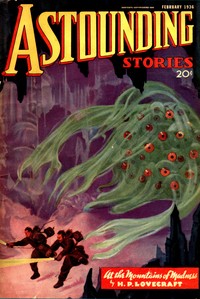
The narrator, a geologist from Miskatonic University, opens by stating he is "forced into speech" to oppose a planned Antarctic invasion, citing his own expedition's findings. The story immediately establishes a tension between scientific credibility and the "extravagant and incredible" nature of what he must reveal. Lovecraft grounds the horror in concrete details: the Pabodie drilling apparatus, described with technical precision, and the narrator's insistence on photographs and ink drawings as evidence. The excerpts show a methodical, report-like tone that contrasts with the mounting dread.
The Sculptures as Evidence
The excerpts devote considerable space to describing the mural sculptures found in the alien city. Lovecraft emphasizes their technical mastery: "In delicacy of execution no sculpture I have ever seen could approach it." The carvings are arranged in three-foot-wide horizontal bands, alternating with geometrical arabesques based on the quantity five. The narrator notes a "peculiar treatment of perspective" and an "analytical psychology beyond that of any known race of antiquity." These details serve not only as world-building but as a form of evidence—the narrator repeatedly insists on the photographs of these carvings as proof. The sculptures depict the life and history of a vanished race, and their "abnormal historic-mindedness" allows the expedition to reconstruct events across vast geologic periods. Lovecraft uses the precision of the description to lend credibility to the fantastic, grounding the horror in the meticulous observation of an alien aesthetic.
The Role of the Narrator's Voice
The first-person narration is crucial to the story's effect. The narrator, William Dyer, presents himself as a reluctant witness, a man of science whose warnings may be ignored. He admits his obscurity—"relatively obscure men like myself and my associates, connected only with a small university"—and anticipates doubt. This self-awareness creates a sense of authenticity, as if the reader is being let in on a suppressed truth. The excerpts show a careful, almost legalistic tone: the narrator lists his credentials, describes the drilling apparatus, and justifies his methods. Yet this rational framework gradually gives way to descriptions of the "hideously convincing" carvings. The tension between the narrator's measured voice and the increasingly disturbing content is a key structural element, making the horror feel earned rather than gratuitous.
The Antarctic Setting as Scientific Frontier
The catalog subjects list Antarctica, fossils, and scientific expeditions, and the excerpts bear this out. The setting is not merely a backdrop but an active element: the "vast fossil hunt" and "wholesale boring and melting of the ancient ice caps" are the expedition's stated goals. Lovecraft uses the real-world context of Antarctic exploration—the story was published in 1936, when the continent was still largely unmapped—to lend plausibility. The narrator emphasizes the practical challenges: the Pabodie drill is designed for "lightness, portability, and capacity to combine the ordinary Artesian drill principle with the principle of the small circular rock drill." This technical language grounds the fantastic discoveries in a recognizable scientific endeavor. The isolation and extreme environment amplify the horror, as the expedition is cut off from the outside world, forced to rely on its own resources and judgment.
Readers should pay close attention to how Lovecraft uses the narrator's scientific authority to validate the unbelievable. The story rewards careful reading of the descriptive passages, which contain clues to the nature of the alien civilization. The excerpts suggest that the horror lies not in overt action but in the slow accumulation of detail—the carvings, the architecture, the sense of a vast, inhuman history. Approach the text as a puzzle to be solved, where every observation may hold a key to the larger mystery.
I kept thinking about Dyer’s quiet dread in the Antarctic stones—how he saw something vast and inhumane and couldn’t unsee it. That same echo of domestic unease stayed with me after Opposite neighbours. Not monsters, but the ordinary walls we build, and the carvings we leave behind. That one stayed, too, like a faint cold draft at the back of a warm room. Opposite neighbours — Reading Companion seemed to understand that lingering.