About 101 minutes
Little Alfred — A Reader’s Guide
Fantasy Juvenile Worlds
23,078 recorded words. 12 minutes difference from this book's estimate.
View Gutenberg source #62941
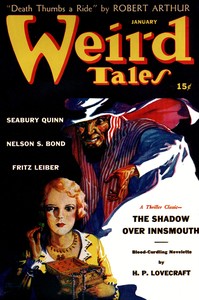
For The shadow over Innsmouth — Background and Themes, the stored edition analysis reports 20,393 words, 1 hr 29 min estimated reading time, and 2 detected text sections.
The text analysis averages about 23.7 words per sentence, while the detected sections provide another way to judge how the source is divided.
Project Gutenberg metadata also associates the work with “Fantasy fiction,” connecting these edition facts with the source record’s subject description.
Explore this collection
These alternatives are selected using recorded categories and estimated reading time.
About 101 minutes
Fantasy Juvenile Worlds
23,078 recorded words. 12 minutes difference from this book's estimate.
View Gutenberg source #62941About 63 minutes
Fantasy Juvenile Worlds
14,437 recorded words. 26 minutes difference from this book's estimate.
View Gutenberg source #25165About 115 minutes
Fantasy Juvenile Worlds
26,229 recorded words. 26 minutes difference from this book's estimate.
View Gutenberg source #76233Search stored excerpts and compare books → Choose by your preferences →
Choices use stored catalog measurements. Estimates vary with reading speed. A shared category is a catalog label, not a claim that two books have the same argument or literary quality.
Search reads excerpt text stored with this catalog and links to its associated Gutenberg record. The connection is stored in the site database; this tool does not recheck that every excerpt is word-for-word identical to that external record. Excerpt search does not cover every chapter and does not verify historical publication dates.
Catalog snapshot checked: 2026-09-25. Coverage: 95 public books, 95 available source excerpts.
Read the complete public-domain text at its original source.
Read on Project GutenbergThe Shadow over Innsmouth opens not with a scream but with a government report. The narrator, a fugitive from the town, frames his account as a belated confession after a secret federal investigation in 1927–28. This bureaucratic preamble—raids, arrests, torpedoes fired into the abyss—establishes a documentary tone that contrasts sharply with the visceral horror to come. Lovecraft’s narrator is a man who has seen something and now must speak, though he admits the public has lost interest. The story’s power lies in this tension: the official record versus the unutterable personal experience.
The opening paragraphs mimic a historical document. The narrator cites dates, government actions, and the suppression of news: “No trials, or even definite charges, were reported; nor were any of the captives seen thereafter in the regular jails.” This is not a ghost story but a dossier. The government’s response—torpedoes, concentration camps, and coerced cooperation from liberal organizations—suggests a threat so profound that normal legal procedures are abandoned. Lovecraft grounds the fantastic in the mundane machinery of state secrecy. The narrator’s own role as the catalyst for the raid (“It was I who fled frantically out of Innsmouth”) gives him a credibility that a mere victim would lack. He is both witness and instigator, his testimony the only bridge between the public record and the hidden truth.
The excerpt from the narrator’s night in the Innsmouth hotel is a masterclass in mounting dread through mundane detail. He notices the missing bolt on his door, finds a matching one on a clothespress, and transfers it with a screwdriver from his keyring. This practical action—described with the precision of a repair manual—becomes a ritual of self-preservation. He bolts the door, then the two lateral doors. He does not undress, keeps a flashlight in his trousers, and plans to read until sleepy. Yet sleep does not come. Instead, he listens “for something which I dreaded but could not name.” The lock is tried, then the connecting doors. The prowler retreats, but the power is cut. The narrator’s careful preparations—the bolt, the flashlight, the refusal to undress—are all rendered useless by the systematic, patient intrusion. Lovecraft uses the protagonist’s own rationality against him: every logical step only delays the inevitable.
Innsmouth itself is a presence. The catalog subject “Harbors” hints at the setting, but the excerpts reveal a place defined by rot: “crumbling, worm-eaten, and supposedly empty houses,” a “stench-cursed town,” and an “abandoned waterfront.” The narrator’s flight occurs in “the early morning hours of July 16, 1927,” a precise timestamp that anchors the horror in real time. The town’s abnormality is not supernatural in the traditional sense but biological and architectural—a decay that suggests something has gone wrong with the natural order. The aged drunkard’s “insane yarn” and his “wild, watery eyes” hint at a lineage of madness. Lovecraft’s prose dwells on surfaces: the cheap bed, the missing bolt, the creaking stairs. The horror is not announced but accumulated, each sensory detail a brick in the wall of dread.
Readers approaching this text should attend to its structure: a confession framed by official documents, a slow build of physical detail, and a narrator whose reliability is both his strength and his weakness. The story rewards attention to its bureaucratic voice and the small, telling gestures of a man trying to outrun something that has already marked him. The excerpts offer only the beginning of the descent; the full weight of Innsmouth’s secret lies in what the narrator dares not say.
I kept thinking about the narrator’s frantic, precise packing in Innsmouth—that doomed attention to detail—and it drifted me toward The Tin Woodman of Oz A Faithful Story of the Astonishing Adventure Undertaken by the Tin Woodman, Assisted by Woot the Wanderer, the Scarecrow of Oz, and Polychrome, the — Reading Notes. Both protagonists move through strange places with such earnest, methodical hopefulness, as if preparation alone might keep the uncanny at bay. I found that quiet resemblance rather touching.
Save your reaction, strongest insight, and memorable passage.