About 101 minutes
Little Alfred — A Reader’s Guide
Fantasy Juvenile Worlds
23,078 recorded words. 14 minutes difference from this book's estimate.
View Gutenberg source #62941
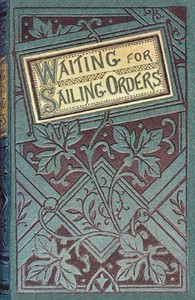
Waiting for sailing orders — Background and Themes can be approached with a clearer sense of reading commitment from its source measurements: 26,229 words, 1 hr 55 min estimated reading time, and 3 detected text sections.
The text analysis averages about 18.8 words per sentence, while the detected sections provide another way to judge how the source is divided.
Project Gutenberg metadata also associates the work with “Christian life -- Juvenile fiction,” connecting these edition facts with the source record’s subject description.
Explore this collection
These alternatives are selected using recorded categories and estimated reading time.
About 101 minutes
Fantasy Juvenile Worlds
23,078 recorded words. 14 minutes difference from this book's estimate.
View Gutenberg source #62941About 136 minutes
Fantasy Juvenile Worlds
31,192 recorded words. 21 minutes difference from this book's estimate.
View Gutenberg source #3162About 136 minutes
Fantasy Juvenile Worlds
31,211 recorded words. 21 minutes difference from this book's estimate.
View Gutenberg source #68677Search stored excerpts and compare books → Choose by your preferences →
Choices use stored catalog measurements. Estimates vary with reading speed. A shared category is a catalog label, not a claim that two books have the same argument or literary quality.
Search reads excerpt text stored with this catalog and links to its associated Gutenberg record. The connection is stored in the site database; this tool does not recheck that every excerpt is word-for-word identical to that external record. Excerpt search does not cover every chapter and does not verify historical publication dates.
Catalog snapshot checked: 2026-09-25. Coverage: 95 public books, 95 available source excerpts.
Read the complete public-domain text at its original source.
Read on Project GutenbergThe preface of Waiting for Sailing Orders is itself a story: the author’s dying mother spoke the title phrase, and three days later “her sailing orders came.” This personal frame gives the book’s religious language a literal, lived weight. The narrative then opens in Newlyn, Cornwall, in April 1862, with a precise account of the mackerel season—boats carrying “a thousand downwards” of fish, agents wading to bid, and a crew of seven sharing profits. The captain, John Trevan, is introduced as “fair and upright,” his judgment trusted implicitly. The text moves from the concrete economics of fishing to a domestic scene where children recite the biblical tale of David and Goliath, linking the sea’s uncertainties to a providential order.
The first chapter grounds the story in the material realities of a fishing village. The mackerel season dictates the rhythm: boats come in “heavily laden,” and the take is reported in a range from “a thousand downwards” to “not one.” The crew of the Mary Ann shares profits equally after setting aside a portion for the vessel and nets. John Trevan, as captain, commands “implicit confidence” from his partners. The agents of London fish-dealers wade into the water to bid, a detail that ties local labor to a wider market. This opening establishes a world where livelihood depends on the sea’s bounty and the fairness of human dealings.
In a later excerpt, children gather to retell the story of David and Goliath. Judith recites it at length, with direct speech from the biblical account: “Thou comest to me with a sword, and a spear, and a shield; but I come to thee in the name of the Lord.” Dick, two years older, admits he “couldn’t do it so well.” When asked why they would like to be David, each child gives a different reason: Dick wants to kill the giant when the army was afraid; Dorothy wants to be “as much thought of” and gain the king’s favour. The scene shows how scripture is internalized and personalized, reflecting the children’s distinct temperaments.
The title phrase appears first in the preface, spoken by the dying mother, and then echoes through the story’s structure. The chapter titles—“Mackerel Fishing,” “The Storm,” “Sailing Orders”—suggest a pattern of preparation and anticipation. The children’s discussion of David and Goliath also involves waiting: David waits for the giant’s challenge, then acts. The preface explicitly connects the mother’s “waiting” to a Christian hope of “the joy and bliss into which the spirit entered.” This motif of patient readiness, whether for a catch, a storm, or death, gives the narrative a quiet, reflective tension.
Readers familiar with Cornish geography will recognize Newlyn and Mount’s Bay, though the story uses setting more as backdrop than character. The religious tone is direct, not allegorical, and the preface’s personal origin may color how one reads the children’s faith. Pay attention to the contrast between the detailed fishing procedures and the scriptural recitations—the book holds both the practical and the pious in steady view.
That old Cornish story stayed with me—how the children’s telling of David and Goliath sat right beside the mackerel nets, faith and sweat in the same breath. It reminded me of another lingering one, a stranger and lighter thing, though no less haunted by its own reaching. The blonde from Barsoom — Context and Discussion carries that same quiet ache beneath its oddness, like a remembered wind between worlds.
Answer a few questions and save a private reflection on this device.