
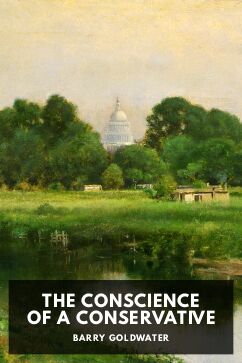
The Conscience of a Conservative - Barry Goldwater
Read "The Conscience of a Conservative - Barry Goldwater" Online
This book is available in the public domain. Start reading the digital edition below.
Book Preview
A short preview of the book’s content is shown below to give you an idea of its style and themes.
Let's be clear: this isn't a novel with a plot twist. It's a political manifesto. But its "story" is the argument it builds.
The Story
Goldwater lays out a clear, step-by-step case for a political philosophy rooted in strict constitutional limits. He starts with first principles: the individual's freedom is paramount, and government exists solely to protect that freedom from force and fraud. From there, he applies this lens to everything—states' rights, labor unions, welfare programs, and even foreign policy during the Cold War. Each chapter tackles a different issue, but they all connect back to his core belief: a powerful central government, no matter how well-intentioned, is the greatest threat to personal liberty. He argues that programs like Social Security and federal aid to education, popular at the time, erode personal responsibility and states' authority. The "narrative" is the relentless logic of his position, building to a vision of America that is decentralized and fiercely protective of individual choice.
Why You Should Read It
I picked this up out of historical curiosity, but it gripped me because of its clarity and conviction. Goldwater writes with a directness that's almost jarring today. There's no poll-tested messaging, just plainspoken philosophy. Reading it, you understand the intellectual foundations of modern conservatism in a way news segments never explain. More importantly, it challenges you. Even if you fundamentally disagree (and many will), you have to engage with the questions he raises about freedom, trade-offs, and power. It separates the philosophical roots of a movement from the day-to-day political noise. For a brief book, it packs a serious intellectual punch and makes you think harder about what you actually believe.
Final Verdict
This book is a must-read for anyone trying to understand American political history and the ideas that shape our debates. It's perfect for politically curious readers, history buffs, and anyone tired of shallow political talking points who wants to engage with the foundational arguments. If you're looking for a balanced, neutral overview, this isn't it—it's a passionate, one-sided case. But that's exactly its value. Read it not to agree, but to understand. Pair it with a book from the opposing viewpoint of its era for a fantastic mental workout. It's short, potent, and arguably more relevant now than when it was written.
This book is widely considered to be in the public domain. You can copy, modify, and distribute it freely.







Kenneth Hernandez
1 year agoRead this on my tablet, looks great.