About 231 minutes
At the Earth's Core — Text and Context
Science Fiction Utopias
53,111 recorded words. 2 minutes difference from this book's estimate.
View Gutenberg source #545
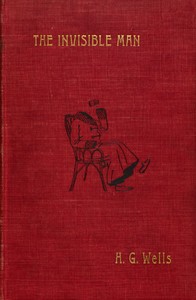
The Invisible Man: A Grotesque Romance — Text and Context can be approached with a clearer sense of reading commitment from its source measurements: 53,399 words, 3 hr 53 min estimated reading time, and 30 detected text sections.
The text analysis averages about 13.6 words per sentence, while the detected sections provide another way to judge how the source is divided.
Project Gutenberg metadata also associates the work with “Science fiction,” connecting these edition facts with the source record’s subject description.
Explore this collection
These alternatives are selected using recorded categories and estimated reading time.
About 231 minutes
Science Fiction Utopias
53,111 recorded words. 2 minutes difference from this book's estimate.
View Gutenberg source #545About 229 minutes
Science Fiction Utopias
52,523 recorded words. 4 minutes difference from this book's estimate.
View Gutenberg source #66864About 249 minutes
Science Fiction Utopias
57,057 recorded words. 16 minutes difference from this book's estimate.
View Gutenberg source #32Search stored excerpts and compare books → Choose by your preferences →
Choices use stored catalog measurements. Estimates vary with reading speed. A shared category is a catalog label, not a claim that two books have the same argument or literary quality.
Search reads excerpt text stored with this catalog and links to its associated Gutenberg record. The connection is stored in the site database; this tool does not recheck that every excerpt is word-for-word identical to that external record. Excerpt search does not cover every chapter and does not verify historical publication dates.
Catalog snapshot checked: 2026-09-25. Coverage: 95 public books, 95 available source excerpts.
Read the complete public-domain text at its original source.
Read on Project GutenbergFrom the first sentence, H. G. Wells establishes a world of harsh physicality: the stranger arrives "through a biting wind and a driving snow," wrapped "from head to foot" with only "the shiny tip of his nose" visible. The prose is deliberately cluttered with detail—the snow piling on his shoulders, the white crest on his portmanteau—creating a sense of oppressive materiality that contrasts with the invisibility to come. Wells's choice to filter the initial encounter through Mrs. Hall's practical, profit-minded perspective grounds the extraordinary in the mundane. Her reaction to the stranger's refusal to remove his hat and coat is not alarm but a housekeeper's concern for her carpet: "the melting snow that still sprinkled his shoulders dripped upon her carpet." This tension between the quotidian and the uncanny drives the early chapters.
Wells renders the invisible man through a series of negations and substitutions. The stranger is described almost entirely by what covers him: "thickly gloved hand," "soft felt hat," a coat that hides his face. When he speaks, his voice comes from a "headless garment" or a "dressing-gown" that walks. In Chapter XVIII, Kemp stares at "the headless garment" and shakes "an invisible hand." The body is present only as a void, a shape defined by clothing and action. This technique forces the reader to imagine the invisible form, making the absence more vivid than any direct description could be. Wells also uses sound—the "rapid feet" to the door, the "sound of a yawn"—to suggest a body that cannot be seen.
The conversations between Kemp and the Invisible Man reveal character through rhythm and interruption. The Invisible Man's speech is jagged, full of dashes and self-interruption: "I can't tell you to-night," he says, then groans and leans forward. His paranoia emerges in short, explosive phrases: "The cur!" "I should have killed him!" Kemp, by contrast, speaks in measured, probing questions: "Where did you get the money?" "What's the shot wound?" The asymmetry in their dialogue—one frantic, the other calculating—builds tension. Wells also uses the Invisible Man's own words to undercut his credibility. He claims to have made "a discovery" and insists "it is quite a possible thing," but his exhaustion and desperation suggest instability. The dialogue never fully explains the science, keeping the focus on character rather than mechanism.
The early chapters at the "Coach and Horses" blend domestic comedy with creeping dread. Mrs. Hall's reaction to the stranger is framed in economic terms: "A guest to stop at Iping in the wintertime was an unheard-of piece of luck." Her efforts to impress—laying the table "with the utmost éclat," briskly managing her "lymphatic maid"—are rendered with a wry, observational tone. The stranger's refusal to remove his hat and coat becomes a social awkwardness before it becomes a mystery. Wells uses the inn's confined spaces—the parlour, the bar, the staircase—to create a stage where the invisible man's oddities are observed by a cast of ordinary people. The burglary at the vicarage and the "furniture that went mad" are reported as local gossip, filtering the fantastic through provincial bewilderment.
The Invisible Man's scientific rhetoric is marked by a blend of grandiosity and evasion. He speaks of "a discovery" and "such things" without specifying, using vague superlatives to imply power. When Kemp presses for details, the Invisible Man deflects: "I meant to keep it to myself. I can't. I must have a partner." Wells gives him a vocabulary of necessity—"I must sleep or perish," "I've had no sleep for near three days"—that humanizes him even as his actions grow threatening. The scientific principles are never explained in full; instead, Wells offers glimpses through the Invisible Man's own fragmented account. This restraint keeps the focus on the psychological and social consequences of invisibility rather than its plausibility. Kemp's reaction—"It's—incredible. Three things happening like this, overturning all my preconceptions"—mirrors the reader's own suspension of disbelief.
Wells's achievement in The Invisible Man lies in his ability to make the impossible feel immediate through precise, sensory detail and carefully calibrated dialogue. The novel rewards attention to its verbal texture: the way a character's speech reveals their state of mind, the way a setting is built from small, concrete observations. Readers may find it useful to track how often the invisible man is described not by what he is, but by what he is not—and how the ordinary world of Iping and its inhabitants becomes a lens for the extraordinary.
Years among these shelves have taught me that invisibility wears many coats, from Wells’s Griffin—a man undone by his own science—to the shining solitude of the Maid. Both speak of being seen and unseen, of a purpose that isolates. Quietly, they keep each other company. Personal Recollections of Joan of Arc — Volume 1 — Context and Discussion holds that same hush, that wonder at a singular soul. It is a gentle kinship, nothing more.
Create a short personal record of your experience with this book.