About 33 minutes
Love and Moondogs — Story, Setting & Ideas
Science Fiction Utopias
7,428 recorded words. 0 minutes difference from this book's estimate.
View Gutenberg source #60654
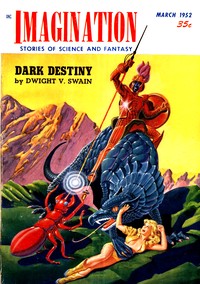
The source record for Ride the Crepe Ring — Reading Notes measures this digital text at 7,547 words, 33 min estimated reading time, and 1 detected text section.
The text analysis averages about 14.3 words per sentence, while the detected sections provide another way to judge how the source is divided.
Project Gutenberg metadata also associates the work with “Science fiction,” connecting these edition facts with the source record’s subject description.
Explore this collection
These alternatives are selected using recorded categories and estimated reading time.
About 33 minutes
Science Fiction Utopias
7,428 recorded words. 0 minutes difference from this book's estimate.
View Gutenberg source #60654About 34 minutes
Science Fiction Utopias
7,623 recorded words. 1 minutes difference from this book's estimate.
View Gutenberg source #63827About 32 minutes
Science Fiction Utopias
7,243 recorded words. 1 minutes difference from this book's estimate.
View Gutenberg source #73586Search stored excerpts and compare books → Choose by your preferences →
Choices use stored catalog measurements. Estimates vary with reading speed. A shared category is a catalog label, not a claim that two books have the same argument or literary quality.
Search reads excerpt text stored with this catalog and links to its associated Gutenberg record. The connection is stored in the site database; this tool does not recheck that every excerpt is word-for-word identical to that external record. Excerpt search does not cover every chapter and does not verify historical publication dates.
Catalog snapshot checked: 2026-09-25. Coverage: 95 public books, 95 available source excerpts.
Read the complete public-domain text at its original source.
Read on Project GutenbergStephen Marlowe, writing as Milton Lesser, opens 'Ride the Crepe Ring' with a striking contrast between setting and character: Mimas is described as 'a cold little world' where temperatures are kept in the forties, yet the protagonist Socrates Smith 'sweated.' The sweat forms 'little glistening beads on his forehead'—a physical detail that immediately signals anxiety beneath the veneer of a resort promoter. This tension between the advertised pleasure spot and the actual risk recurs throughout the story, anchored in specific, tangible observations rather than abstract danger.
Marlowe uses dialogue to reveal character quickly and economically. Socrates Smith’s speech is peppered with precise numbers—'Eight-hundred eighty-five million nine-hundred and sixty-three thousand seventy-two'—which he recites 'proudly,' showing his obsessive pride in his resort’s statistics. In contrast, the government inspector Farquhart speaks in clipped, bureaucratic phrases: 'We’ve had enough monkey business.' Their exchange is a verbal sparring match, with Farquhart’s blunt accusations ('You gave phony asthma to ten thousand people') undercutting Smith’s salesmanship. The dialogue never becomes exposition; it stays rooted in the characters’ immediate goals—Smith selling, Farquhart inspecting.
The story repeatedly emphasizes physical sensations and bodily reactions. Smith’s sweat is mentioned multiple times, and later, during the ring ride, 'Socrates' insides began to hurt from the acceleration' and 'His feet were numb from working the pedals.' Mrs. Entwhistle is 'slammed back in her seat' and 'trying to scream, only she couldn’t quite make it.' These details ground the science-fiction premise in visceral experience. Marlowe does not merely state that the ride is dangerous; he shows the body’s involuntary responses—whimpering, numbness, broken straps—making the peril tangible without melodrama.
The narrative restricts the reader’s knowledge to what Socrates perceives, heightening suspense. Inside the crepe ring, 'vague flitting shadows' and 'half-seen images' replace clear vision; the only cues are red and green warning lights. Marlowe describes the piloting as 'like an organist' playing pedals, but the reader cannot see the rocks—only the lights and the characters’ reactions. When Norma’s ship is hit, the reader learns of it through a radio call: 'My ship’s a mess, gutted with holes.' This technique forces the audience to share the characters’ uncertainty, making the eventual escape feel earned rather than arbitrary.
Marlowe subtly undermines the futuristic setting with faulty equipment. Smith’s earlier venture involved 'inferior' spacesuits that caused asthma; in the present, the war-surplus cruisers are described as 'two-man cruisers, all twenty of them,' but their reliability is never guaranteed. During the crisis, 'one of the meteoric pebbles had streaked through their ship: it now was an airless place,' and only the spacesuits—the same kind that failed before—stand between them and vacuum. This recurring detail ties the story’s central conflict to a history of corner-cutting, suggesting that the danger is not cosmic but commercial.
Readers attentive to Marlowe’s craft will notice how he builds a complete, self-contained world in under 8,000 words. The story’s economy—every line of dialogue advances character, every physical detail reinforces tension—makes it a model of mid-century pulp storytelling. Approach the text not as a simple adventure but as a study in how a writer can make a reader feel the cold of space and the sweat of a salesman through precise, unadorned prose.
There’s a moment in Ride the Crepe Ring where the ride’s thrill turns thin, and you feel the emptiness underneath the tourist trap. It reminded me of a similar ache in The people of the ruins — Reading Companion, that quiet sense of being lost inside someone else’s grand adventure. Strange how those old stories linger.
Answer a few questions and save a private reflection on this device.