About 243 minutes
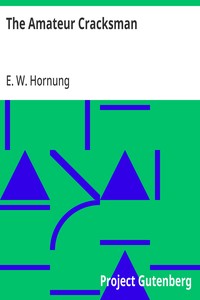
The Amateur Cracksman — A Closer Reading
Historical Psychological Social Fiction
55,764 recorded words. 37 minutes difference from this book's estimate.
View Gutenberg source #706
Before opening A Study in Scarlet — Reading Notes, the edition data offers a quick orientation: 47,245 words, 3 hr 26 min estimated reading time, and 16 detected text sections.
The text analysis averages about 16.7 words per sentence, while the detected sections provide another way to judge how the source is divided.
Project Gutenberg metadata also associates the work with “Holmes, Sherlock (Fictitious character) -- Fiction,” connecting these edition facts with the source record’s subject description.
Explore this collection
These alternatives are selected using recorded categories and estimated reading time.
About 243 minutes
Historical Psychological Social Fiction
55,764 recorded words. 37 minutes difference from this book's estimate.
View Gutenberg source #706About 247 minutes
Historical Psychological Social Fiction
56,791 recorded words. 41 minutes difference from this book's estimate.
View Gutenberg source #530About 253 minutes
Historical Psychological Social Fiction
58,004 recorded words. 47 minutes difference from this book's estimate.
View Gutenberg source #2551Search stored excerpts and compare books → Choose by your preferences →
Choices use stored catalog measurements. Estimates vary with reading speed. A shared category is a catalog label, not a claim that two books have the same argument or literary quality.
Search reads excerpt text stored with this catalog and links to its associated Gutenberg record. The connection is stored in the site database; this tool does not recheck that every excerpt is word-for-word identical to that external record. Excerpt search does not cover every chapter and does not verify historical publication dates.
Catalog snapshot checked: 2026-09-25. Coverage: 95 public books, 95 available source excerpts.
Read the complete public-domain text at its original source.
Read on Project GutenbergThe opening of A Study in Scarlet introduces Dr. John Watson as a war-wounded veteran, not a detective. His account of the battle of Maiwand and subsequent enteric fever establishes a narrator whose physical and psychological state is fragile. This is not the brisk, confident Watson of later stories; he is adrift, with an income of eleven shillings and sixpence a day, and it is this vulnerability that leads him to seek lodgings and encounter Sherlock Holmes.
The catalog subjects list Holmes and private investigation as primary, but the excerpts reveal that the novel’s first chapter is dominated by Watson’s medical history and his slow adjustment to London. Holmes does not appear until well into the chapter, and when he does, his introduction is through a chance meeting and a laboratory experiment—not a crime scene. The detective’s methods are described before any mystery is presented.
The novel is divided into two parts: Part I, set in London, and Part II, titled “The Country of the Saints,” which shifts to the American West. The excerpts from Part II depict a man and a little girl dying of thirst on a salt plain, with buzzards circling overhead. This is not a detective story in any conventional sense. The dialogue between the man and the child—her asking “Did God make this country?” and his uncertain reply—introduces a religious and geographical desolation that has no direct connection to Holmes.
The catalog subjects do not mention this Western narrative. A reader expecting only a London mystery will encounter a prolonged flashback that occupies roughly half the book. The connection between the two parts is only hinted at in the excerpts: the man’s mention of “compasses, or map, or somethin’” and the child’s mother being dead. The structure forces the reader to hold two disparate settings in mind.
Holmes is introduced not through a case but through a monologue on deductive reasoning. In Chapter II, he explains to Watson that “from a drop of water, a logician could infer the possibility of an Atlantic or a Niagara.” This is presented as a scientific principle, but the excerpts show that Holmes’s actual methods in the London investigation rely heavily on physical evidence—a wedding ring, a word written in blood—and on the testimony of a policeman, John Rance.
The catalog subject “Detective and mystery stories” suggests a focus on plot, but the excerpts emphasize Holmes’s personality and his intellectual vanity. He corrects Watson’s assumptions about his profession, stating he is a “consulting detective.” The term is new, and the excerpts do not show him solving the crime in these early chapters. Instead, the reader watches him gather data and dismiss the official police.
Watson’s Jezail bullet wound and his subsequent fever are described in precise medical detail: “shattered the bone and grazed the subclavian artery.” This injury is not merely backstory; it shapes his perspective. He is a man who has seen death and is now living on a small pension. His physical limitations—he walks with a limp, he is weak—contrast with Holmes’s restless energy.
In the Western section, the man and the child are also marked by physical suffering: thirst, cracked lips, and the loss of companions. The child’s mother is dead, and the man admits he has not prayed since he was “half the height o’ that gun.” The excerpts do not reveal whether these wounds are healed or avenged. The novel’s title, A Study in Scarlet, suggests blood, but the excerpts show that blood is both literal (the battle, the murder) and symbolic (the emotional cost of survival).
The excerpts from A Study in Scarlet reveal a work that is less a pure detective story than a hybrid: part medical memoir, part Western survival tale, part introduction to a new kind of fictional detective. Readers should note that the catalog subjects emphasize Holmes and England, but the novel’s second half is set in Utah and involves Mormon history. Pay attention to how Doyle uses Watson’s limited knowledge to control what the reader learns. The gaps in the excerpts—the identity of the murderer, the fate of the little girl—are deliberate narrative choices that the full text resolves in unexpected ways.
Reading Doyle’s London fog and Utah dust, I found myself thinking of the quiet mountain town in The Dove in the Eagle's Nest — A Closer Reading. Both books hold a similar ache—a past that refuses to stay buried. One solves its mystery with logic; the other simply waits. That contrast lingered with me for days. A gentle echo, nothing more.
Create a short personal record of your experience with this book.