About 267 minutes
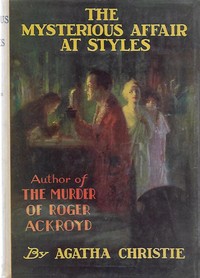
The Mysterious Affair at Styles — Reading Companion
Historical Psychological Social Fiction
61,319 recorded words. 4 minutes difference from this book's estimate.
View Gutenberg source #863

The source record for Droll Stories — Volume 2 — Context and Discussion measures this digital text at 62,291 words, 4 hr 31 min estimated reading time, and 5 detected text sections.
The text analysis averages about 31.9 words per sentence, while the detected sections provide another way to judge how the source is divided.
Project Gutenberg metadata also associates the work with “Humorous stories,” connecting these edition facts with the source record’s subject description.
Explore this collection
These alternatives are selected using recorded categories and estimated reading time.
About 267 minutes
Historical Psychological Social Fiction
61,319 recorded words. 4 minutes difference from this book's estimate.
View Gutenberg source #863About 267 minutes
Historical Psychological Social Fiction
61,282 recorded words. 4 minutes difference from this book's estimate.
View Gutenberg source #1925About 253 minutes
Historical Psychological Social Fiction
58,004 recorded words. 18 minutes difference from this book's estimate.
View Gutenberg source #2551Search stored excerpts and compare books → Choose by your preferences →
Choices use stored catalog measurements. Estimates vary with reading speed. A shared category is a catalog label, not a claim that two books have the same argument or literary quality.
Search reads excerpt text stored with this catalog and links to its associated Gutenberg record. The connection is stored in the site database; this tool does not recheck that every excerpt is word-for-word identical to that external record. Excerpt search does not cover every chapter and does not verify historical publication dates.
Catalog snapshot checked: 2026-09-25. Coverage: 95 public books, 95 available source excerpts.
Read the complete public-domain text at its original source.
Read on Project GutenbergThe second ten tales of Balzac's Droll Stories open with a prologue in which the Author—a persona distinct from Balzac—defends his archaic language against critics, comparing them to “cannibals, churls, and sycophants.” This defensive posture frames the collection as a deliberate archaism, a claim to an older, racier tradition of French storytelling. The tales that follow, however, are not uniformly droll: they mix farce with violence, legal testimony with supernatural legend, and courtly intrigue with bodily comedy. The structure of the volume moves from a clerical joke ("The Three Clerks of Saint Nicholas") to a murder story ("The Succubus") and a Rabelaisian sermon, suggesting a deliberate range in tone and subject matter.
The prologue establishes a combative narrator who insists on the difficulty of inventing “A Hundred Droll Tales” and claims to have “seventy droll stories, in that reservoir of nature, his brain.” This self-conscious framing is not merely defensive; it sets up the tales as performances of a certain kind of literary virility. The Author compares his critics to “kind, good-natured friends” who are “rough and sharp as currycombs,” a simile that blends domesticity with abrasion. Throughout the volume, the narrator occasionally interjects with asides, such as “by the gods!” or “certes,” reinforcing the pretense of an oral, old-fashioned delivery. This voice is consistent but not uniform: in “The Sermon of the Merry Vicar of Meudon,” the narration shifts to a more reverent tone when describing Rabelais’s “Homeric head” and “flowing majesty” of beard, suggesting the narrator can modulate his style according to subject.
Several tales share a cluster of violent, watery images. In “The Succubus,” the advocate drags Sardini by the collar “towards the water to throw him to the bottom of the Loire,” and the struggle ends with Sardini “falling into a slough” and the advocate’s face “splashed with the blood of his wife.” The Loire appears as both a setting and a threat. In the same tale, the murdered Madame Avenelles is “hurled no one knew where,” denied Christian burial—a fate linked to the river’s erasure. Water also appears in “The Sermon of the Merry Vicar of Meudon” as a metaphor: Rabelais hears “his last hours tinkling in his ears,” a phrase that evokes dripping or flowing. Strangling recurs as a method of attack: Sardini is “half strangle[d]” and later “badly strangled,” while the advocate’s grip is described as that of “a devil in long robes.” These repeated physical details create a tactile, brutal undercurrent beneath the tales’ comic surfaces.
The tales shift rapidly between social spaces, often within a single paragraph. In “The Succubus,” the action moves from the advocate’s house to the riverbank, then to the queen’s cabinet where the fair Limeuil is “brought to bed in the queen's cabinet—a great scandal.” The narrator glosses this movement with a knowing aside about Catherine de Medici’s friendship. In “The Sermon of the Merry Vicar of Meudon,” the scene opens at the court of Henry II, in the castle of Tournelles, then narrows to a conversation between the king and Rabelais. The king’s question—“Hast thou ever delivered a sermon to thy parishioners of Meudon?”—prompts Rabelais’s expansive reply: “Sire, my listeners are in every place, and my sermon heard throughout Christendom.” This reply redefines the physical setting as metaphorical, a move typical of the volume’s interest in collapsing distance between court, parish, and the wider world of letters.
The penultimate tale, “The Sermon of the Merry Vicar of Meudon,” introduces François Rabelais as a character, described as “the king of all wits, and a far better king than he who wore the crown.” This is the only tale in the volume to feature a historical author as protagonist, and it serves as a kind of homage. The tale’s setting—winter, the king’s castle, Rabelais’s house in the gardens of St Paul—is unusually specific, and the narrative pauses to list courtiers, cardinals, and poets by name. This density of historical reference contrasts with the more generic, folkloric settings of earlier tales like “The Three Clerks of Saint Nicholas.” Placing a Rabelais story near the end suggests a lineage: Balzac’s own droll tales are presented as heirs to Rabelais’s “good philosophy.” The volume’s epilogue, though not excerpted, likely reinforces this claim, tying the collection to a specifically Touraine tradition of irreverent wisdom.
Readers approaching this volume should attend to the tension between the narrator’s boastful, archaic persona and the often grim events he relates. The tales reward attention to recurring physical details—hands, water, collars, moonlight—that link otherwise disparate stories. The presence of Rabelais as a character invites comparison between Balzac’s project and its sixteenth-century model, but the volume’s structure, moving from clerical farce to domestic murder, suggests a broader range than the title “droll” might imply.
That rainy afternoon, I kept returning to the Succubus’s testimony—how water and authority shifted like half-heard confessions. The clamor stayed with me, so I set the book down and wandered into another shelf. In its quieter pages, the same weight of contested inheritance felt gentler, almost domestic. Both left me staring out the window, listening to rain on the glass. The Dove in the Eagle's Nest — A Closer Reading ended up being that gentler echo.
Build a private reading journal entry for this title.