About 267 minutes
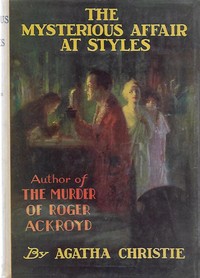
The Mysterious Affair at Styles — Reading Companion
Historical Psychological Social Fiction
61,319 recorded words. 0 minutes difference from this book's estimate.
View Gutenberg source #863

The catalog record for Droll Stories — Volume 1 — Context and Discussion provides practical reading context through 61,282 words, 4 hr 27 min estimated reading time, and 7 detected text sections.
The text analysis averages about 26.9 words per sentence, while the detected sections provide another way to judge how the source is divided.
Project Gutenberg metadata also associates the work with “Humorous stories,” connecting these edition facts with the source record’s subject description.
Explore this collection
These alternatives are selected using recorded categories and estimated reading time.
About 267 minutes
Historical Psychological Social Fiction
61,319 recorded words. 0 minutes difference from this book's estimate.
View Gutenberg source #863About 271 minutes
Historical Psychological Social Fiction
62,291 recorded words. 4 minutes difference from this book's estimate.
View Gutenberg source #2318About 253 minutes
Historical Psychological Social Fiction
58,004 recorded words. 14 minutes difference from this book's estimate.
View Gutenberg source #2551Search stored excerpts and compare books → Choose by your preferences →
Choices use stored catalog measurements. Estimates vary with reading speed. A shared category is a catalog label, not a claim that two books have the same argument or literary quality.
Search reads excerpt text stored with this catalog and links to its associated Gutenberg record. The connection is stored in the site database; this tool does not recheck that every excerpt is word-for-word identical to that external record. Excerpt search does not cover every chapter and does not verify historical publication dates.
Catalog snapshot checked: 2026-09-25. Coverage: 95 public books, 95 available source excerpts.
Read the complete public-domain text at its original source.
Read on Project GutenbergThe translator's preface immediately frames this volume as a deliberate literary archaism, praising Balzac's imitation of sixteenth-century style and his 'triumph of literary archaeology.' The prologue then adopts a mock-scholarly tone, claiming the stories were 'collected from the abbeys of Touraine.' This framing device signals that the reader is entering a constructed, playful version of the past, not a straightforward historical record.
The first tale, 'The Fair Imperia,' opens with a scene of abrupt violence and equally abrupt comedy: a captain stabs his mistress, then moments later declares 'I'll make thee braver than a queen.' The narrator notes that 'it is only in these houses of ill-fame that love is made with the blow of a dagger.' This tonal whiplash is characteristic of the volume's method.
The translator's preface and the prologue work together to create a deliberate distance between the reader and the tales. The preface emphasizes Balzac's 'imitation of the style of the sixteenth century' and calls the book 'a model of that which it professes to imitate.' The prologue then claims the stories were 'collected from the abbeys of Touraine,' a fictional origin that mimics medieval manuscript discoveries. This frame invites the reader to enjoy the tales as artifacts, not as naturalistic narratives.
The effect is reinforced by the archaic language of the translation, which uses terms like 'merrie jests' and 'venial sin' in titles, and phrases such as 'Dominus vobiscum' within the text. The narrator occasionally addresses the reader directly, as when he says 'these are things ladies of the high-neck dress do not understand.' This conspiratorial tone positions the reader as a knowing participant in a literary game.
The excerpt from 'The Fair Imperia' demonstrates the volume's characteristic speed in moving between extreme emotions. The captain Cochegrue stabs Pasquerette, and she falls 'stiff as the body of a man that had been hanged.' Yet within a few lines, she revives with 'a box on the ears' and the captain declares 'let us recommence our evening prayer where we left it off.' The narrator comments that 'the whole rookery passed from tears to laughter as it had previously from laughter to tears.'
This pattern recurs throughout the tales. Violence is treated as a practical matter—the captain says 'wipe up your blood, it belongs to me'—and is immediately subordinated to the pursuit of money or pleasure. The reader is not allowed to dwell on the brutality; the narrative pushes forward into the next scheme or jest. This technique keeps the tone light despite the dark subject matter.
In the same excerpt, the plot turns on a scheme to steal 30,000 crowns hidden under a pear-tree. Chiquon, the hunchbacked cousin, proposes the theft with elaborate euphemisms: 'if 30,000 crowns were walking about at night under the shadow of a pear-tree, would you not stoop down to pluck them?' The captain responds with a promise to 'kill three citizens at the corner of the Quay' if necessary, but Chiquon assures him no killing will be needed.
This exchange reveals the moral economy of the tales: greed is a natural motive, and trickery is a form of wit. The characters are frank about their desires, and the narrator treats their schemes with amusement rather than judgment. The Lombard's servant, who betrays her master's secret, is described as having 'chattered of it to me in fondness'—a casual phrase that normalizes betrayal. The reader is invited to admire the cleverness of the plot, not to question its ethics.
Throughout the excerpt, the narrator interjects with generalizations that guide the reader's response. After the rapid shift from violence to merriment, he states: 'It is only in these houses of ill-fame that love is made with the blow of a dagger, and where tempests of joy rage between four walls.' This comment both explains the scene and distances the reader from it, implying that such behavior belongs to a different world.
Similarly, the narrator uses direct address to create a sense of shared understanding. When he says 'these are things ladies of the high-neck dress do not understand,' he flatters the reader as someone who does understand—someone who can appreciate the rough humor of the tales. This technique is consistent with the mock-antiquarian frame, as the narrator poses as a worldly guide to a coarser age.
As you read through the ten tales, pay attention to how Balzac (and his translator) maintain the archaic voice without letting it become a burden. The stories are short and move quickly; the humor depends on timing and on the reader's willingness to accept sudden reversals. The volume rewards those who enjoy wordplay and who are not put off by the casual treatment of violence. The prologue and epilogue frame the collection as a unified work, so reading them first and last will help you see the overall design.
The rain kept time with the mock-serious cadence of Balzac’s prefaces, and I lost the afternoon somewhere between a bawdy laugh and a sudden, startling tear. That tonal whiplash reminded me of something else on my shelf, waiting. So, after the last tale, I reached for Droll Stories — Volume 3 — Inside the Classic, almost without deciding to. The afternoon simply continued, same weather, different echoes.
Answer a few questions and save a private reflection on this device.