About 47 minutes
The Last Days of L.A. — Themes and Context
Science Fiction Utopias
10,621 recorded words. 4 minutes difference from this book's estimate.
View Gutenberg source #60671
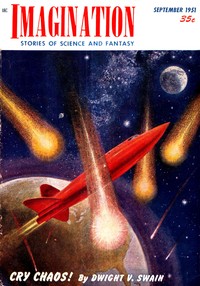
The source record for I'll See You in My Dreams — Reading Notes measures this digital text at 11,550 words, 51 min estimated reading time, and 2 detected text sections.
The text analysis averages about 10.3 words per sentence, while the detected sections provide another way to judge how the source is divided.
Project Gutenberg metadata also associates the work with “Science fiction,” connecting these edition facts with the source record’s subject description.
Explore this collection
These alternatives are selected using recorded categories and estimated reading time.
About 47 minutes
Science Fiction Utopias
10,621 recorded words. 4 minutes difference from this book's estimate.
View Gutenberg source #60671About 46 minutes
Science Fiction Utopias
10,422 recorded words. 5 minutes difference from this book's estimate.
View Gutenberg source #63986About 56 minutes
Science Fiction Utopias
12,851 recorded words. 5 minutes difference from this book's estimate.
View Gutenberg source #68718Search stored excerpts and compare books → Choose by your preferences →
Choices use stored catalog measurements. Estimates vary with reading speed. A shared category is a catalog label, not a claim that two books have the same argument or literary quality.
Search reads excerpt text stored with this catalog and links to its associated Gutenberg record. The connection is stored in the site database; this tool does not recheck that every excerpt is word-for-word identical to that external record. Excerpt search does not cover every chapter and does not verify historical publication dates.
Catalog snapshot checked: 2026-09-25. Coverage: 95 public books, 95 available source excerpts.
Read the complete public-domain text at its original source.
Read on Project GutenbergFrom its opening lines, I'll See You in My Dreams establishes a dual register: the telepathic exchange between disembodied beings named El and Bee uses a terse, thought-only syntax (“El outer-thought, 'I've had all I want of it, haven't you?'”), while the earthly scenes employ a naturalistic, almost mundane dialogue. This contrast is not merely stylistic—it structures the entire narrative, as the alien council’s debate over resurrecting Lust (a “minor god who grew major”) intercuts with Ted Truesdale’s suburban morning-after conversations with his wife Ann. Gault’s diction in the Venusian passages favors abstract nouns (“colors they can't see, the grass they can't smell”) and collective decision-making, whereas the Earth-bound dialogue is dense with specific domestic details: rotary floor waxers, hamburgers as a test, a squeaky fifth stair. The result is a story that treats cosmic yearning and marital routine as two sides of the same coin.
Gault’s most distinctive authorial choice is the compression of the aliens’ speech into a thought-based shorthand. Verbs are often omitted (“Nothing from Bee for seconds, and then: 'I—don't know. I suppose.'”), and punctuation is used to indicate hesitation or interruption. This creates a voice that feels both ancient and impatient, as if the speakers have outgrown the need for full sentences. By contrast, the human dialogue is leisurely, filled with qualifiers and social cues: “I don't usually like this kind of talk. Why am I talking like this?” The shift is abrupt when the narrative cuts from the Assembly’s clipped exchange (“Not that bloody Mars,” Peak thought. “I'll veto that, every time.”) to Ted’s careful evasion about rumpling his bedclothes. The reader is left to gauge which mode is more honest—the blunt telepathy or the layered human conversation.
Throughout the excerpts, physical sensation is both longed for and distrusted. The disembodied beings recall having had bodies (“When did our bodies go, Bee?”) and miss sensory experiences: colors, smells, sounds. Yet when Bee proposes projecting someone to Earth “in some innocent guise, some animal who talks the language,” the plan is to inhabit a form. On Earth, Ted’s body is a source of deception—he shaves, rumples sheets, climbs stairs avoiding the fifth step—while his wife Ann is described in precise, almost clinical terms: “one slender tanned arm flung along the pillow's upper edge.” The story’s title, a line from a popular song, hints at a desire for reunion that is simultaneously physical and spectral. Gault never lets the reader forget that bodies are both the medium of connection and the site of its failure.
The Earth-bound scenes are anchored in specific, recognizable details: the Blairs’ party, Henri’s attempted kiss, the test of hamburgers for a gourmet. Ann’s morning dialogue is brisk and self-aware (“I must be sub-human”), while Ted’s internal monologue is full of rationalization. Gault uses these mundane exchanges to ground the story’s speculative elements. When Ted wonders, “What did she dream of, his Ann? Of porridge and pottery and poinsettias?” the list is deliberately prosaic, contrasting with the cosmic stakes of the Venusian council. The effect is to make the alien intervention feel less like fantasy and more like an intrusion of the extraordinary into a world of schedules and floor waxers. The story’s tension derives from this collision: will the domestic or the otherworldly win out?
The provided text breaks off before the plot resolves, leaving key questions open. Has Ha (the projected entity) already arrived on Earth? Is Ted’s dream-visit to Venus real, or a psychological symptom? Gault’s prose deliberately blurs these lines: “Coincidence? And the rest an illusion?” The Assembly’s debate about resurrecting Lust suggests a thematic link to Ted and Ann’s marital dissatisfaction, but the excerpts do not confirm whether the alien scheme succeeds. Readers must attend to small clues—the change in Ann’s demeanor, Ted’s sense that “something was different”—without knowing their outcome. This ambiguity is not a flaw but a deliberate structural choice, forcing the reader to inhabit the same uncertainty as the characters.
Readers approaching I'll See You in My Dreams should pay close attention to the way Gault modulates tone between the telepathic and the terrestrial. The story rewards those who notice how a single word—like “barren” or “unsatisfactory”—echoes across both realms. Because the excerpts are incomplete, the ending remains open to interpretation; the key is to track how the author uses the mundane to make the fantastic feel plausible, and vice versa.
The rain kept time with Gault’s clipped telepathic rhythms, and I found myself lingering on the way his couple’s domestic sparring masked a deeper yearning. That ache for something unnameable stayed with me long after the last page. Later, drying my hands on a dish towel, I picked up Your Time is Up — Key Ideas to Explore, and the same quiet tension seemed to echo there, almost by accident.
Save your reaction, strongest insight, and memorable passage.