About 46 minutes
The Last Laugh — Text and Context
Science Fiction Utopias
10,422 recorded words. 1 minutes difference from this book's estimate.
View Gutenberg source #63986
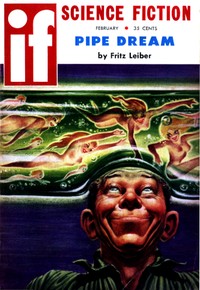
For The Last Days of L.A. — Themes and Context, the stored edition analysis reports 10,621 words, 47 min estimated reading time, and 1 detected text section.
The text analysis averages about 15.3 words per sentence, while the detected sections provide another way to judge how the source is divided.
Project Gutenberg metadata also associates the work with “Science fiction,” connecting these edition facts with the source record’s subject description.
Explore this collection
These alternatives are selected using recorded categories and estimated reading time.
About 46 minutes
Science Fiction Utopias
10,422 recorded words. 1 minutes difference from this book's estimate.
View Gutenberg source #63986About 46 minutes
Science Fiction Utopias
10,421 recorded words. 1 minutes difference from this book's estimate.
View Gutenberg source #76849About 51 minutes
Science Fiction Utopias
11,550 recorded words. 4 minutes difference from this book's estimate.
View Gutenberg source #65347Search stored excerpts and compare books → Choose by your preferences →
Choices use stored catalog measurements. Estimates vary with reading speed. A shared category is a catalog label, not a claim that two books have the same argument or literary quality.
Search reads excerpt text stored with this catalog and links to its associated Gutenberg record. The connection is stored in the site database; this tool does not recheck that every excerpt is word-for-word identical to that external record. Excerpt search does not cover every chapter and does not verify historical publication dates.
Catalog snapshot checked: 2026-09-25. Coverage: 95 public books, 95 available source excerpts.
Read the complete public-domain text at its original source.
Read on Project GutenbergThe story opens with a direct address: “You are having the same recurring dream.” The second-person voice immediately implicates the reader in the protagonist’s nightmare, a recurring vision of nuclear holocaust that has haunted the world since 1945. The prose shifts between the visceral horror of the dream—where “seas of flame spread at supersonic speeds”—and the mundane, hungover reality of a man who crawls out of bed at noon, drinks beer, and wanders to a bar. This juxtaposition of apocalyptic dread and alcoholic routine establishes the story’s central tension: a world waiting for the bomb while its inhabitants numb themselves with drink and false faith.
Smith’s use of “you” is not a gimmick but a structural choice that erases the distance between reader and protagonist. The narrator never names the main character; he is simply “you,” a stand-in for any American male of the late 1950s. This technique forces the reader to inhabit the protagonist’s hangover, his cynical thoughts, and his terror. When the dream recurs, the line “you know it’s true” collapses the boundary between nightmare and waking. The second person also heightens the story’s moral ambiguity: the reader is complicit in the protagonist’s drinking, his dismissal of a wino, and his eventual worship of a faith healer. The voice is intimate and accusatory, as if the story itself is a confession.
The language oscillates between clinical observation and raw panic. In the dream sequences, Smith uses short, breathless clauses: “You feel the blast, the searing heat, you feel your flesh melting away.” The repetition of “you” and the present tense create a sense of inescapable immediacy. In contrast, the waking scenes are flat and sardonic: “It’s a week day and you ought to be down at the office turning out advertising copy by the ton.” This deadpan tone mirrors the protagonist’s emotional numbness. The dialogue is similarly stripped—the wino’s “Amen!” and the protagonist’s “Liquor, brother, is the salvation of the race” are delivered with a hollow, performative cheerfulness that underscores the story’s bleak humor.
Three motifs recur with increasing intensity. The first is the rat: a “huge rat” with “arrogant red eyes” that stares at the protagonist from an alley, then walks away “unhurried and cocky.” The rat becomes a symbol of survival—the line “The rats will survive. The rats always survive” echoes through the story. The second motif is fire: the dream’s “boiling sea of flame” and “radioactive hell” are described in lurid, physical detail, with people turned to cinders and flesh boiling away. The third motif is religious fraud: the faith healer Elinda Egers, with her “astonishing breasts” and shouted invocations of “the God Power,” offers a desperate, sexualized salvation. The protagonist embraces her as “the only real goddess,” but the story undercuts this faith by showing her failure and the crowd’s indifference.
The story is built on a repeating cycle: dream, awakening, drinking, wandering, encounter, and return to dream. The narrative does not progress in a linear fashion but circles back to the same nightmare, each time with more detail. The excerpts show two full cycles—the first ending with the protagonist singing “Rock of Ages” after finding his religion, the second with him waking to a half-empty bottle of wine. This structure mirrors the protagonist’s addiction: each drink and each religious experience is a temporary escape that fails to break the loop. The story’s title, The Last Days of L.A., suggests an impending end, but the narrative itself is stuck in a perpetual pre-apocalyptic present, where the bomb is always about to fall and the protagonist is always about to wake up.
Readers should pay close attention to how Smith uses the second person not as a stylistic flourish but as a tool for psychological immersion. The story’s power lies in its refusal to offer a clear resolution—the nightmare may be real or not, the faith may be genuine or deluded. The recurring images of rats, fire, and false prophets are not symbols to be decoded but visceral elements of a world on the brink. This is a story that asks not what happens next, but what it feels like to live in the waiting.
Reading about that adman’s unraveling in a burning city, I remembered sitting in my childhood bedroom, flashlight under the blanket, with Out of the sea — Reading Notes. That book also carried a quiet dread, less about fire, more about what the water hides. Both left me staring at the ceiling, feeling the fragile, borrowed weight of ordinary mornings.
Create a short personal record of your experience with this book.