About 46 minutes
The Last Laugh — Text and Context
Science Fiction Utopias
10,422 recorded words. 0 minutes difference from this book's estimate.
View Gutenberg source #63986
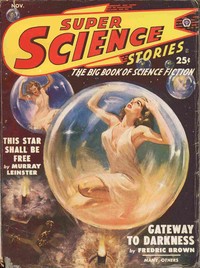
The source record for This star shall be free — A Reader’s Guide measures this digital text at 10,421 words, 46 min estimated reading time, and 1 detected text section.
The text analysis averages about 14.8 words per sentence, while the detected sections provide another way to judge how the source is divided.
Project Gutenberg metadata also associates the work with “Science fiction,” connecting these edition facts with the source record’s subject description.
Explore this collection
These alternatives are selected using recorded categories and estimated reading time.
About 46 minutes
Science Fiction Utopias
10,422 recorded words. 0 minutes difference from this book's estimate.
View Gutenberg source #63986About 47 minutes
Science Fiction Utopias
10,621 recorded words. 1 minutes difference from this book's estimate.
View Gutenberg source #60671About 42 minutes
Science Fiction Utopias
9,444 recorded words. 4 minutes difference from this book's estimate.
View Gutenberg source #76899Search stored excerpts and compare books → Choose by your preferences →
Choices use stored catalog measurements. Estimates vary with reading speed. A shared category is a catalog label, not a claim that two books have the same argument or literary quality.
Search reads excerpt text stored with this catalog and links to its associated Gutenberg record. The connection is stored in the site database; this tool does not recheck that every excerpt is word-for-word identical to that external record. Excerpt search does not cover every chapter and does not verify historical publication dates.
Catalog snapshot checked: 2026-09-25. Coverage: 95 public books, 95 available source excerpts.
Read the complete public-domain text at its original source.
Read on Project GutenbergThe story opens with Tork spearing fish from a rock, a scene that establishes the precarious, primal existence of the cave-dwellers. The sudden terror of the tribe at the sight of a silent, silver ovoid—an Antarean ship—contrasts with Tork's initial curiosity. Leinster grounds the alien encounter in sensory detail: the ship is “huge, two hundred feet by three hundred,” floating “tranquilly a hundred yards above the tree-tops.” The narrative voice shifts between Tork's limited understanding and the reader's broader awareness, a technique that persists throughout the excerpts.
The excerpts depict a harsh social order among the cave-folk. One-Ear is the “boss male,” who knocks his own wives and children off a ladder to save himself. Tork is “still gangling and awkward,” avoiding fights with One-Ear. The setting is specific: caves in a chalk formation above a river that “ran through primordial England and France before it joined the Rhine.” This geographical detail grounds the story in a recognizable prehistoric landscape. The tribe's daily concerns—filling bellies, avoiding ogres, spearing ganoid fish—are vividly rendered, contrasting with the abstract, advanced Antarean experiment.
The Antareans are described as a civilization “already a hundred thousand years old,” conducting an experiment in “artificial ecological imbalance.” They introduce flint spears, knives, and arrows to see what happens. The catalog subject “Experiments” is directly relevant, but the excerpts show the experiment's chaotic, uncontrolled consequences: theft of weapons, murder, and a “flint curtain” around Tork's village. The Antareans themselves are glimpsed only through water-filled helmets and a transparent window, maintaining their alien distance. The narrative emphasizes that the cave-folk do not understand the urge to move eastward or the connection to the ship.
After his spear is stolen, Tork retreats to his cave with the “stone-which-called-animals,” an Antarean device. He thinks about the Antareans and has an inspiration described as “the greatest single inspiration that any man has ever known.” The excerpts cut off before revealing the content of this inspiration, but the narrator states that without it, Earth would become an Antarean colony and man “at best a tolerated animal.” This moment is the story's pivot, yet the reader is left with only the setup. The catalog subject “Human-alien encounters” is central, but the encounter is mediated through technology and indirect influence, not direct dialogue.
The excerpts end at a critical juncture, with Tork's inspiration unnamed and its outcome unknown. Readers should note how Leinster balances the mundane details of prehistoric life—marriage, theft, hunger—with the vast, impersonal scale of an interstellar experiment. The story's brevity (about 10,000 words) means every scene carries weight. Pay attention to the repeated motif of misunderstanding: the cave-folk never grasp the Antareans' motives, and the Antareans likely never anticipate Tork's response.
I often think of Tork, gripping that first flint, unaware his hands shaped everything. There’s a hush in that moment, a quiet turning. I find the same strange stillness when I browse The Golden Book of Springfield — Edition Insights, as if both books whisper of futures someone merely glimpsed, waiting patiently to settle into being.
Save your reaction, strongest insight, and memorable passage.