About 389 minutes
The dream: A novel — Text and Context
Science Fiction Utopias
89,343 recorded words. 2 minutes difference from this book's estimate.
View Gutenberg source #69394
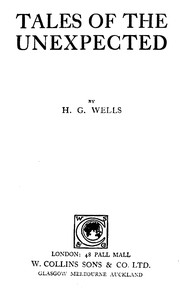
For Tales of the Unexpected — Themes and Context, the stored edition analysis reports 89,861 words, 6 hr 31 min estimated reading time, and 8 detected text sections.
The text analysis averages about 17.4 words per sentence, while the detected sections provide another way to judge how the source is divided.
Project Gutenberg metadata also associates the work with “Science fiction,” connecting these edition facts with the source record’s subject description.
Explore this collection
These alternatives are selected using recorded categories and estimated reading time.
About 389 minutes
Science Fiction Utopias
89,343 recorded words. 2 minutes difference from this book's estimate.
View Gutenberg source #69394About 393 minutes
Science Fiction Utopias
90,235 recorded words. 2 minutes difference from this book's estimate.
View Gutenberg source #71806About 409 minutes
Science Fiction Utopias
93,892 recorded words. 18 minutes difference from this book's estimate.
View Gutenberg source #73376Search stored excerpts and compare books → Choose by your preferences →
Choices use stored catalog measurements. Estimates vary with reading speed. A shared category is a catalog label, not a claim that two books have the same argument or literary quality.
Search reads excerpt text stored with this catalog and links to its associated Gutenberg record. The connection is stored in the site database; this tool does not recheck that every excerpt is word-for-word identical to that external record. Excerpt search does not cover every chapter and does not verify historical publication dates.
Catalog snapshot checked: 2026-09-25. Coverage: 95 public books, 95 available source excerpts.
Read the complete public-domain text at its original source.
Read on Project GutenbergIn 'The Remarkable Case of Davidson's Eyes,' the narrator describes a thunderstorm that 'had completely upset my work' and hears glass smash in the adjoining laboratory. This sensory detail—'the hail was playing the devil's tattoo on the corrugated zinc of the roof'—immediately establishes a charged atmosphere. Wells uses such precise, physical observations to ground his most fantastical premises. The story's opening voice is that of a witness, not a scientist, which creates a deliberate distance from the extraordinary event. The narrator's bafflement mirrors the reader's, as Davidson 'clawing out at something invisible a yard in front of his face' suggests a dislocation of perception that the story will explore through a rational, almost clinical frame.
Several stories in this collection employ a first-person narrator who is not the protagonist but an observer. In 'Davidson's Eyes,' the narrator insists he was 'the immediate witness of his seizure,' a phrase that underscores both proximity and limitation. This framing device allows Wells to present the inexplicable without requiring the reader to accept it as fact—the narrator can only report what he saw, not explain it. Similarly, in 'A Dream of Armageddon,' the story is delivered as a confession to a fellow traveler, with the listener interjecting 'I have been there' to ground the fantastic in shared geography. The effect is a tension between the rational tone of the reporting and the irrational content of the tale.
Wells frequently manipulates time and place within a single story. In 'Davidson's Eyes,' the narrator speculates about 'oddest possibilities of inter-communication in the future, of spending an intercalary five minutes on the other side of the world.' This casual mention of temporal dislocation foreshadows the story's central conceit. In 'A Dream of Armageddon,' the dreamer describes a future Pleasure City at Capri, with 'miles of floating hotels, and huge floating stages to which the flying machines came.' The shift from a mundane railway carriage to this vivid, sunlit future is abrupt and disorienting. Wells uses these leaps to question the stability of the present, suggesting that the unexpected can intrude at any moment.
The stories alternate between rapid, action-driven passages and slower, descriptive interludes. In 'Davidson's Eyes,' the initial crisis unfolds in quick, fragmented sentences: 'Then came another sound, a smash—no doubt of it this time.' But once the narrator enters the laboratory, the pace slows as he observes Davidson's confusion in detail. In 'A Dream of Armageddon,' the dream sequence lingers on sensory impressions—'the sunlight on her face caressing the lines of her cheeks and neck'—before the narrator abruptly returns to the present. This contrast between the vividness of the dream and the grayness of the waking world creates a rhythmic tension that mirrors the story's central conflict between desire and duty.
Readers approaching this collection should attend to the subtle shifts in narrative distance. Wells often places his most extraordinary claims in the mouths of unreliable or secondary narrators, leaving the reader to weigh evidence. The stories reward attention to small details—a phrase like 'the devil's tattoo' or a gesture like 'clawing out at something invisible'—that accumulate into a coherent, unsettling vision. The unexpected in these tales is not merely a plot twist but a disruption of the familiar, rendered with enough concrete specificity to feel almost plausible.
I’ve always found Wells’s collection a curious shelter—those improbable windows in time, where a dream feels more solid than a morning. Funny, how the same shiver lives in Tales of the Unexpected, that quiet vertigo when the world slips its moorings. I thought of it again beside The people of the ruins — Reading Companion, another old friend whispering that every age’s ruins are just tomorrow’s ordinary ground.
Build a private reading journal entry for this title.