About 391 minutes
Tales of the Unexpected — Themes and Context
Science Fiction Utopias
89,861 recorded words. 2 minutes difference from this book's estimate.
View Gutenberg source #66409
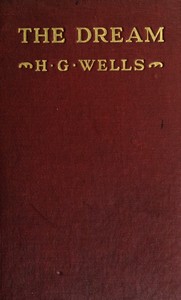
The dream: A novel — Text and Context can be approached with a clearer sense of reading commitment from its source measurements: 89,343 words, 6 hr 29 min estimated reading time, and 8 detected text sections.
The text analysis averages about 14.8 words per sentence, while the detected sections provide another way to judge how the source is divided.
Project Gutenberg metadata also associates the work with “Science fiction,” connecting these edition facts with the source record’s subject description.
Explore this collection
These alternatives are selected using recorded categories and estimated reading time.
About 391 minutes
Science Fiction Utopias
89,861 recorded words. 2 minutes difference from this book's estimate.
View Gutenberg source #66409About 393 minutes
Science Fiction Utopias
90,235 recorded words. 4 minutes difference from this book's estimate.
View Gutenberg source #71806About 409 minutes
Science Fiction Utopias
93,892 recorded words. 20 minutes difference from this book's estimate.
View Gutenberg source #73376Search stored excerpts and compare books → Choose by your preferences →
Choices use stored catalog measurements. Estimates vary with reading speed. A shared category is a catalog label, not a claim that two books have the same argument or literary quality.
Search reads excerpt text stored with this catalog and links to its associated Gutenberg record. The connection is stored in the site database; this tool does not recheck that every excerpt is word-for-word identical to that external record. Excerpt search does not cover every chapter and does not verify historical publication dates.
Catalog snapshot checked: 2026-09-25. Coverage: 95 public books, 95 available source excerpts.
Read the complete public-domain text at its original source.
Read on Project GutenbergThe novel opens not in the past but in a future where Sarnac, a scientist, works on nervous cell reactions and takes a holiday with his companion Sunray. Their world is one of guest-houses, lakes, and leisurely creativity—a stark contrast to the cramped, contentious household that soon emerges. Wells builds the narrative as a dream experienced by Sarnac, in which he becomes Harry Mortimer Smith, a boy in a struggling family. The structure thus moves between two registers: the idyllic, almost pastoral future and the detailed, often harsh social realities of Edwardian England.
The book’s opening establishes a deliberate structural split. Sarnac and Sunray inhabit a world of cooperative guest-houses, artistic pursuits, and scientific enquiry. The prose is calm, expansive, and filled with sensory ease: “they played with boats upon the great lake,” “the clay take shape in his hands.” This future society is implied to have solved many of the problems that plague the dream-world. When the narrative shifts to Harry’s childhood, the language becomes tighter, more cluttered with domestic detail and economic anxiety. The contrast is not merely thematic but stylistic—the future scenes are broad and philosophical, the past scenes narrow and immediate. Wells uses this frame to let the reader experience the past as a kind of oppressive dream from which the future has awakened.
Throughout the excerpts, food appears as a marker of class, comfort, and tension. In the future, Sarnac and Sunray enjoy fish cooked by an old man, a communal pleasure. In Harry’s world, meals are fraught: “potatoes roasted in their jackets” or a “frying-pan of potatoes and other vegetables in dripping” are described as heartening additions to cold bacon and bread. The contrast is subtle but persistent. The future’s food is shared freely; the past’s food is carefully managed, a small luxury. Matilda Good reads newspaper accounts of murders at supper, turning the meal into a forum for discussing human motive. The recurring image of food thus ties together the novel’s interest in material conditions and moral inquiry.
Wells frequently shifts location to mark changes in fortune or perspective. The excerpts show movement from the lakes and mountains of the future to the basement kitchen of the Smith family, then to the street where a motor-car arrives. Each shift is accompanied by a change in sensory detail: the future is open air and water; the past is enclosed, subterranean, lit by gas or oil. The arrival of brother Ernest in his chauffeur’s uniform brings the outside world into the basement, and the conversation about Fanny reveals how the family’s geography has contracted. The novel uses these movements to underscore how social position determines physical space—the Smiths are always moving downward or sideways, never upward.
The dialogue in the past sections is rendered with careful attention to class markers. Characters drop h’s and use contractions like “’ow” and “’ad,” while Matilda Good speaks in a more educated register. The exchanges are quick, often overlapping, and reveal family dynamics through interruption and tone. When Ernest announces he has seen Fanny, the mother gasps and Matilda leans forward “billowing.” The dialogue carries the weight of unspoken judgments—about Fanny’s fall, about respectability, about the family’s place in the world. In contrast, the future characters speak in a more measured, reflective way, their conversations about art and science free from economic pressure. This vocal contrast reinforces the novel’s central structural opposition.
Readers attentive to the novel’s frame will notice how Wells uses the dream device not as a mere plot mechanism but as a way to juxtapose two modes of living. The future is not described in exhaustive detail; it remains a sketch against which the past is measured. The value of the book lies less in its utopian vision than in the precise, unsentimental rendering of a vanished social world—its kitchens, its hierarchies, its small cruelties and fleeting solidarities.
There’s something about Sarnac looking back at Harry’s cramped, anxious world that makes me think of how we revisit our own younger selves—the smell of boiled cabbage, the weight of unspoken family rules. It’s a strange comfort, seeing the past from a distance. I felt that same quiet ache reading An enemy of peace — Edition Insights, where the shadows of old conflicts linger in ways we rarely acknowledge.
Save your reaction, strongest insight, and memorable passage.