About 28 minutes
Your Time is Up — Key Ideas to Explore
Science Fiction Utopias
6,275 recorded words. 0 minutes difference from this book's estimate.
View Gutenberg source #59297
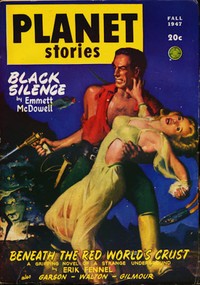
The catalog record for Zero Hour — Edition Insights provides practical reading context through 6,257 words, 28 min estimated reading time, and 1 detected text section.
The text analysis averages about 11.7 words per sentence, while the detected sections provide another way to judge how the source is divided.
Project Gutenberg metadata also associates the work with “Science fiction,” connecting these edition facts with the source record’s subject description.
Explore this collection
These alternatives are selected using recorded categories and estimated reading time.
About 28 minutes
Science Fiction Utopias
6,275 recorded words. 0 minutes difference from this book's estimate.
View Gutenberg source #59297About 30 minutes
Science Fiction Utopias
6,840 recorded words. 2 minutes difference from this book's estimate.
View Gutenberg source #60608About 25 minutes
Science Fiction Utopias
5,748 recorded words. 3 minutes difference from this book's estimate.
View Gutenberg source #76128Search stored excerpts and compare books → Choose by your preferences →
Choices use stored catalog measurements. Estimates vary with reading speed. A shared category is a catalog label, not a claim that two books have the same argument or literary quality.
Search reads excerpt text stored with this catalog and links to its associated Gutenberg record. The connection is stored in the site database; this tool does not recheck that every excerpt is word-for-word identical to that external record. Excerpt search does not cover every chapter and does not verify historical publication dates.
Catalog snapshot checked: 2026-09-25. Coverage: 95 public books, 95 available source excerpts.
Read the complete public-domain text at its original source.
Read on Project GutenbergRay Bradbury's 'Zero Hour' opens with a deceptive burst of childhood exuberance: children 'catapulted this way and that across the green lawns,' their game of 'Invasion' a whirlwind of laughter and chaos. Yet beneath this innocent surface, Bradbury weaves a tension between the frantic energy of the young and the dismissive indifference of adults, who see only 'fierce energy' and 'tolerantly amused' themselves. The story's power lies in this contrast—the children's precise, secretive instructions ('Do that, and bring that over here. No! Here, ninnie!') versus the parents' obliviousness, until the final, chilling shift when a mother's submerged fears erupt, and the game becomes terrifyingly real.
Bradbury uses the vocabulary of childhood games to mask an alien invasion, creating a dissonance that grows more unsettling as the story progresses. The children's dialogue is peppered with imperatives and exclamations—'Yayyyy!', 'Go away,' 'Can't!'—that sound like ordinary playground banter. Yet their actions, such as collecting 'knives and forks and pokers and old stove pipes,' hint at a purpose beyond make-believe. The older children's scorn ('Let them sissies play!') reinforces the divide between those who understand and those who are excluded. The mother's later realization that 'all the subconscious suspicion and fear' had been 'logically and carefully and sensibly rejected' underscores how the familiar language of play becomes a vehicle for dread.
The story sharply contrasts the perspectives of children and adults. The younger children, led by seven-year-old Mink, are wholly absorbed in their game, while parents 'came and went in chromium beetles,' preoccupied with 'repair men' and 'fluttering television sets.' The adults are 'jealous of the fierce energy of the wild tots' but remain 'tolerantly amused,' never questioning the oddity of the children's activities. Twelve-year-old Joseph Connors, caught between groups, shows 'reluctance and a certain wistfulness' but is dismissed as 'old.' This generational rift is crucial: the parents' failure to take the game seriously—even when Mink's mother senses something wrong—leads directly to the story's climax. The attic scene, where the mother locks them in and throws away the key, represents a desperate, belated attempt to bridge that gap.
Bradbury builds tension through incremental details: the 'electric humming,' the 'queer cold light suddenly visible under the door crack,' and the 'strange odor' that finally 'got through to Henry Morris, too.' The mother's panic, described as 'all the subconscious suspicion and fear that had gathered secretly all afternoon,' erupts in a torrent of babbling. The husband's initial anger—'Are you crazy? Why'd you throw that key away!'—gives way to shared terror as 'heavy, heavy, very HEAVY footsteps' ascend the stairs. The climax is stark: the attic lock melts, the door opens, and Mink's innocent 'Peek-a-boo' becomes a horrifying greeting. The story ends on that note, leaving the invasion's success implied but not shown, a masterful use of restraint.
Readers should pay close attention to Bradbury's use of sensory details—sounds, lights, and odors—that signal the shift from ordinary to extraordinary. The story's brevity (under 6,300 words) rewards rereading, as early descriptions of the children's game take on new significance. Note how the author withholds explicit confirmation of the aliens' nature, letting the parents' and readers' imaginations fill the void. This ambiguity is the story's lasting strength.
Reading about that mother’s dread in Zero Hour, I remembered afternoons when my own child’s whispered games felt unsettling. The attic scene stayed with me oddly. Later, Classified object — Background and Themes returned me to that same quiet chill, its examination of hidden spaces under ordinary rooms. Both books seem to ask what we miss in the familiar, and I still notice creaking floorboards differently now.
Save your reaction, strongest insight, and memorable passage.