About 38 minutes
Jonah of the Jove-Run — Reading Notes
Science Fiction Utopias
8,701 recorded words. 1 minutes difference from this book's estimate.
View Gutenberg source #64420
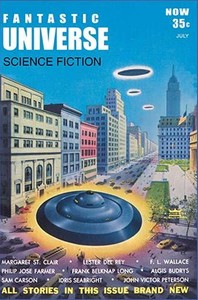
The source record for Classified object — Background and Themes measures this digital text at 8,894 words, 39 min estimated reading time, and 1 detected text section.
The text analysis averages about 13.9 words per sentence, while the detected sections provide another way to judge how the source is divided.
Project Gutenberg metadata also associates the work with “Science fiction,” connecting these edition facts with the source record’s subject description.
Explore this collection
These alternatives are selected using recorded categories and estimated reading time.
About 38 minutes
Science Fiction Utopias
8,701 recorded words. 1 minutes difference from this book's estimate.
View Gutenberg source #64420About 37 minutes
Science Fiction Utopias
8,409 recorded words. 2 minutes difference from this book's estimate.
View Gutenberg source #68393About 41 minutes
Science Fiction Utopias
9,210 recorded words. 2 minutes difference from this book's estimate.
View Gutenberg source #72248Search stored excerpts and compare books → Choose by your preferences →
Choices use stored catalog measurements. Estimates vary with reading speed. A shared category is a catalog label, not a claim that two books have the same argument or literary quality.
Search reads excerpt text stored with this catalog and links to its associated Gutenberg record. The connection is stored in the site database; this tool does not recheck that every excerpt is word-for-word identical to that external record. Excerpt search does not cover every chapter and does not verify historical publication dates.
Catalog snapshot checked: 2026-09-25. Coverage: 95 public books, 95 available source excerpts.
Read the complete public-domain text at its original source.
Read on Project GutenbergThe story opens not with an alien encounter but with a radar controller at La Guardia Airport, whose tired eyes fix on a blip too bright and too persistent to ignore. The object moves with 'inexorable' precision from New Hackensack toward the George Washington Bridge. This grounded, procedural start—air traffic jargon, electronic range-marks, a reference bearing mark—sets the tone for a tale more concerned with technical analysis than with wonder or horror.
The catalog lists 'Physicists -- Fiction' and 'Space ships -- Fiction,' and the excerpts bear this out: the narrative quickly shifts to physicist George Winthrop and General Hill debating the ship's electronics. The central puzzle is not alien intent but a wiring error—a circuit meant to arouse the crew is connected to a gyro assembly instead, slowing the ship to a drift.
The first scene is dominated by the language of air traffic control: 'surveillance radarscope,' 'blip,' 'range-marks,' 'reference bearing mark.' The controller's fatigue and the worsening weather are described in concrete, sensory terms—'the amber light of the 'scope's filter,' 'the radar tent's ultra-violet lighting.' This is not a generic spaceship arrival; it is a specific, localized event tied to New Jersey geography (Teterboro, New Hackensack) and the procedures of La Guardia Tower. The catalog subject 'New York (N.Y.) -- Fiction' is thus realized not as a backdrop but as a functional setting that shapes the story's texture.
The excerpts reveal that the alien ship's technology is not incomprehensibly advanced. Physicist Lizio states, 'their science is not superior to ours except in application. It found anti-gravity, for one thing!' The key discovery is a 'draftsman's error, or a technician's error': a circuit meant to transmit a pulse to awaken the crew is instead connected to a gyro assembly, slowing the ship. This mechanical flaw drives the plot, not alien motives. The catalog subject 'Physicists -- Fiction' is thus accurate: the story centers on electronics, schematics, and the math of anti-gravity, with characters like Benton Allan working on 'magnetic lines of force' and 'force fields for use as meteor screens.'
Amid the technical discussion, a curious detail emerges: 'There was a comic book in the alien space ship—of a sort. But it wasn't meant for children.' This object is mentioned only briefly, but it hints at a cultural artifact within the alien vessel. Additionally, a punched tape is found that 'spelled Destination: Earth,' suggesting the ship's intended target. The excerpts do not reveal why the ship came or what the comic book contains, but these details ground the story in material evidence rather than abstract speculation. The catalog subject 'Short stories' is accurate; the narrative is compact, focusing on a single incident and its immediate investigation.
The excerpts end before the crew is awakened or the ship's origin is confirmed, leaving the central mystery unresolved within the available text. Readers should pay attention to the interplay between technical jargon and human tension—the story's realism lies in its procedural details, not in grand revelations. The comic book and the miswired circuit are clues that may reward careful re-reading, but the narrative's strength is in its grounded, step-by-step investigation of the unknown.
I remember the afternoon I shelved the physicist’s notes on that alien ship—the miswired circuit humming with quiet potential—and later, in the same week, found myself turning to The man who saved New York — Reading Companion. Both share a gentle ache: what happens when clever hands are one small twist away from waking something, or saving everything. A kinship of near-misses, really.
Your answers remain private and are stored only in this browser.