About 38 minutes
Jonah of the Jove-Run — Reading Notes
Science Fiction Utopias
8,701 recorded words. 1 minutes difference from this book's estimate.
View Gutenberg source #64420
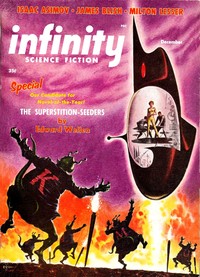
My sweetheart's the Man in the Moon — Reading Notes can be approached with a clearer sense of reading commitment from its source measurements: 8,409 words, 37 min estimated reading time, and 1 detected text section.
The text analysis averages about 12.5 words per sentence, while the detected sections provide another way to judge how the source is divided.
Project Gutenberg metadata also associates the work with “Science fiction,” connecting these edition facts with the source record’s subject description.
Explore this collection
These alternatives are selected using recorded categories and estimated reading time.
About 38 minutes
Science Fiction Utopias
8,701 recorded words. 1 minutes difference from this book's estimate.
View Gutenberg source #64420About 39 minutes
Science Fiction Utopias
8,894 recorded words. 2 minutes difference from this book's estimate.
View Gutenberg source #73358About 34 minutes
Science Fiction Utopias
7,623 recorded words. 3 minutes difference from this book's estimate.
View Gutenberg source #63827Search stored excerpts and compare books → Choose by your preferences →
Choices use stored catalog measurements. Estimates vary with reading speed. A shared category is a catalog label, not a claim that two books have the same argument or literary quality.
Search reads excerpt text stored with this catalog and links to its associated Gutenberg record. The connection is stored in the site database; this tool does not recheck that every excerpt is word-for-word identical to that external record. Excerpt search does not cover every chapter and does not verify historical publication dates.
Catalog snapshot checked: 2026-09-25. Coverage: 95 public books, 95 available source excerpts.
Read the complete public-domain text at its original source.
Read on Project GutenbergThe story opens not with a rocket launch but with Jeanne turning off a radio and descending stairs, watching sunlight fleck gold-shot curtains. Her shudder at the thought of the sun scorching up there immediately establishes a contrast between cozy domesticity and the hostile void of space. The family scene that follows—Aunt Anna fluttering eyebrows, Pop puffing his calabash pipe, Mom retreating to the kitchen—reads like a sitcom, yet Jeanne’s internal monologue reveals a mask of flippancy she wears when emotions threaten. This tension between the mundane and the monumental drives the narrative.
Jeanne’s narration is laced with self-awareness. She “instantly hat[es] the flippant way she tried to speak” and admits she “slip[s] on the mask, the carefree attitude, the what-do-I-care voice” when choked up. This verbal tic recurs: she chortles about “some fellow trying to make time because Tom's too far away to protest,” then mentally kicks herself. The story’s voice oscillates between Jeanne’s brittle humor and the earnest, almost melodramatic dialogue of other characters—like the weeping bride who confesses her secret marriage. Lesser uses this contrast to keep the reader off-balance, never sure whether the next line will be a punchline or a plea.
The first half of the excerpt moves at a leisurely, almost claustrophobic pace, confined to the Peterson living room. Pop’s pipe, Aunt Anna’s magazine, and Mom’s burning roast ground the scene in triviality. Then the phone rings, and a stranger’s frantic voice introduces a new tempo: “a quick-rushing torrent of words.” The bride’s confession about Curt’s midnight launch and her pregnancy accelerates the plot abruptly. Jeanne’s internal calculation—imagining Aunt Anna’s gossip, Pop’s grunt, Mom’s retreat—slows the moment again, but the countdown has begun. The story’s rhythm mirrors the tension between everyday life and the relentless forward motion of space exploration.
Dan Lubrano, mentioned only in passing, is a “fast-buck boy” who would tell Jeanne to “don a pair of football shoulderpads” and tackle Captain Macomber—a reference to Weller’s football equipment, “nothing but a cash-on-the-line endorsement.” This detail, along with the Cleopatra Facial Soap program “Hands Across the Ocean,” frames the entire story as a commercial broadcast. The master of ceremonies speaks “like Clem McCarthy,” and the show promises to reunite lovers “courtesy of Cleopatra.” Lesser embeds the narrative within a media spectacle, suggesting that even the most personal moments—a fiancée’s fear, a secret marriage—are fodder for sponsorship. The soap opera structure is not just a gimmick but a commentary on how the space race is packaged for public consumption.
Lesser’s story rewards attention to its layered voices: Jeanne’s defensive wit, the bride’s tearful urgency, the announcer’s mechanical cheer. The excerpts leave unresolved whether the soap opera frame will collapse into genuine emotion or remain a cynical performance. Readers should note how the author uses the radio show’s format to compress time and heighten stakes, and how the domestic setting amplifies the cosmic distance. The story’s brevity (8,409 words) makes it a tight, efficient example of 1950s science fiction that prioritizes character over hardware.
That one’s a strange ache, isn’t it — all that tinny radio static, the waiting for a voice that might not come home. It stayed with me like a half-remembered song. I'll See You in My Dreams — Reading Notes has that same quiet hum underneath the laughter, the way love keeps time with loss without ever saying so aloud.
Save your reaction, strongest insight, and memorable passage.