About 57 minutes
Call Him Nemesis — Story, Setting & Ideas
Science Fiction Utopias
12,977 recorded words. 20 minutes difference from this book's estimate.
View Gutenberg source #61090
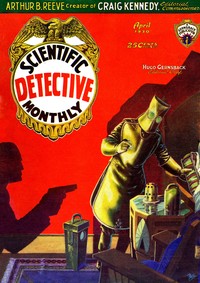
The source record for The invisible master — Themes and Context measures this digital text at 17,498 words, 1 hr 17 min estimated reading time, and 2 detected text sections.
The text analysis averages about 18.2 words per sentence, while the detected sections provide another way to judge how the source is divided.
Project Gutenberg metadata also associates the work with “Science fiction,” connecting these edition facts with the source record’s subject description.
Explore this collection
These alternatives are selected using recorded categories and estimated reading time.
About 57 minutes
Science Fiction Utopias
12,977 recorded words. 20 minutes difference from this book's estimate.
View Gutenberg source #61090About 56 minutes
Science Fiction Utopias
12,851 recorded words. 21 minutes difference from this book's estimate.
View Gutenberg source #68718About 51 minutes
Science Fiction Utopias
11,550 recorded words. 26 minutes difference from this book's estimate.
View Gutenberg source #65347Search stored excerpts and compare books → Choose by your preferences →
Choices use stored catalog measurements. Estimates vary with reading speed. A shared category is a catalog label, not a claim that two books have the same argument or literary quality.
Search reads excerpt text stored with this catalog and links to its associated Gutenberg record. The connection is stored in the site database; this tool does not recheck that every excerpt is word-for-word identical to that external record. Excerpt search does not cover every chapter and does not verify historical publication dates.
Catalog snapshot checked: 2026-09-25. Coverage: 95 public books, 95 available source excerpts.
Read the complete public-domain text at its original source.
Read on Project GutenbergEdmond Hamilton's The Invisible Master opens with a skeptical newspaper reporter, Charlie Carton, dismissing a tip about a physicist who has supposedly discovered invisibility. The story's voice is established through brisk, colloquial dialogue and a city-editor's pragmatic demand to beat rival papers. This initial cynicism sets a tone that contrasts sharply with the later, more urgent passages describing a city in chaos under an invisible menace.
The narrative shifts from the reporter's wry observations to a taut, almost procedural account of a trap set in a dark wood. The prose becomes clipped and sensory—"softly through the darkness," "scrubby woods that rose on either side of the road seemed impenetrable walls of blackness"—as the pace accelerates from journalistic banter to a tense, nocturnal stakeout.
The story's opening voice is distinctly conversational. Carton's retort to his editor—"I'll get out of it some pointers on the methods of publicity-crazy scientists, if nothing else"—establishes a knowing, slightly sardonic narrator. This tone persists through the early scenes at the university, where rival reporters greet Carton with mockery: "You'll be graduating to the Sunday supplements if you keep on." The language is fast, light, and grounded in the familiar rhythms of a newsroom.
As the plot advances, the voice tightens. Descriptions of New York under the Invisible Master's threat become compressed and urgent: "wild crowds besieging the City Hall," "all New York's customary organized life sinking into chaos." The earlier banter gives way to a more direct, almost breathless recounting of events—the raising of five million dollars, the preparation of a trap. The shift is not abrupt but gradual, mirroring the reporter's own transition from disbelief to involvement.
Hamilton's prose in the trap sequence is notably precise and visual. The plan is laid out in whispered, step-by-step detail: "I'll stretch in a circle of yards around it this thread of wire, and connect it to this pocket-battery and bell." The language here is functional, almost technical, yet it builds tension through its very specificity. The reader is given the exact mechanics of the trap—the wire, the bell, the circle of armed men—so that the waiting becomes palpable.
Recurring details reinforce the setting: "the dark wall of the wood eastward," "the great oak," "the stone the Invisible Master had specified." These concrete markers anchor the suspense. The narrative voice remains neutral, reporting actions without interior commentary, which heightens the sense of a real-time operation. The shift from the reporter's earlier sarcasm to this stark, observational mode is one of the story's most effective structural changes.
Hamilton compresses time effectively in the middle sections. The passage from the Invisible Master's demand to the collection of five million dollars is covered in a single paragraph: "Through the rest of that day and the next the money had poured in." This rapid summary contrasts with the earlier, more leisurely scenes of Carton's subway ride and campus walk. The narrative accelerates as the stakes rise, using short, declarative sentences: "Five millions was a great sum, but not in comparison with the daily loss."
The later excerpts show a further shift: the trap sequence unfolds in near-real time, with dialogue reduced to whispers and actions described in brief, sequential phrases. The result is a story that moves from a reporter's cynical stroll to a breathless, night-bound confrontation. This change in pace is not merely a matter of plot but of sentence rhythm—longer, descriptive lines give way to short, urgent ones, matching the characters' own transition from talk to action.
Readers will notice how Hamilton uses the reporter's perspective to filter the fantastic elements through a skeptical lens, only to abandon that lens as the crisis deepens. The story's voice is its most dynamic feature, shifting from wisecracking dialogue to taut, sensory description. Pay attention to the way the prose tightens as the trap is set—the change in sentence length and vocabulary is a deliberate craft choice that rewards close reading.
Years behind this desk, I’ve noticed how one tale of invisibility can haunt another. That old serial—Grantham’s vanishing menace—leaves a trace in the quieter The eternal savage — Key Ideas to Explore. Both whisper about what hides without being lost, about shades moving unseen through crowds. A patient sort of kinship, the kind only shelves remember.
Your answers remain private and are stored only in this browser.