About 1,402 minutes
The Adventures of Peregrine Pickle — Key Ideas to Explore
Adventure Picaresque Fiction
322,456 recorded words. 490 minutes difference from this book's estimate.
View Gutenberg source #4084
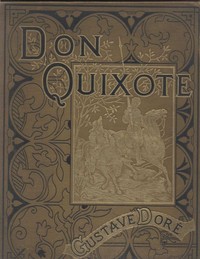
Don Quixote — Inside the Classic can be approached with a clearer sense of reading commitment from its source measurements: 435,116 words, 31 hr 32 min estimated reading time, and 137 detected text sections.
The text analysis averages about 45.4 words per sentence, while the detected sections provide another way to judge how the source is divided.
Project Gutenberg metadata also associates the work with “Spain -- Social life and customs -- 16th century -- Fiction,” connecting these edition facts with the source record’s subject description.
Explore this collection
These alternatives are selected using recorded categories and estimated reading time.
About 1,402 minutes
Adventure Picaresque Fiction
322,456 recorded words. 490 minutes difference from this book's estimate.
View Gutenberg source #4084About 351 minutes
Adventure Picaresque Fiction
80,669 recorded words. 1541 minutes difference from this book's estimate.
View Gutenberg source #62072About 349 minutes
Adventure Picaresque Fiction
80,245 recorded words. 1543 minutes difference from this book's estimate.
View Gutenberg source #1154Search stored excerpts and compare books → Choose by your preferences →
Choices use stored catalog measurements. Estimates vary with reading speed. A shared category is a catalog label, not a claim that two books have the same argument or literary quality.
Search reads excerpt text stored with this catalog and links to its associated Gutenberg record. The connection is stored in the site database; this tool does not recheck that every excerpt is word-for-word identical to that external record. Excerpt search does not cover every chapter and does not verify historical publication dates.
Catalog snapshot checked: 2026-09-25. Coverage: 95 public books, 95 available source excerpts.
Read the complete public-domain text at its original source.
Read on Project GutenbergIn the excerpt, Don Quixote sees a procession carrying a draped image and immediately concludes it is “some illustrious lady” being kidnapped. He charges at the penitents despite Sancho’s warning that it is “the blessed image of the immaculate Virgin.” The knight’s refusal to hear reason—even if “the king had ordered him”—drives the scene into a collision between his chivalric script and the mundane reality of a religious ritual. The comedy hinges on the gap between Quixote’s heroic self-image and the physical consequences: a clown with a forked stick knocks him to the ground. This pattern of misreading and punishment recurs throughout the novel, as the knight’s fixed worldview repeatedly meets the resistance of a world that does not conform to his books.
The excerpt demonstrates how Don Quixote’s adventures are propelled by systematic misreading. He sees a black-draped image and a group of “villains and discourteous thieves” where others see a penitential procession. His interpretation is not random but follows the template of chivalric romance: any veiled woman must be a damsel in distress, any group of men must be her captors. This interpretive framework is so rigid that Sancho’s explicit correction—“mind, that is a procession of penitents”—fails to register. The narrator notes that even had Quixote heard, “he would not have turned back if the king had ordered him.” The comedy arises from the absolute certainty with which the knight applies his mistaken lens, a certainty that no evidence can shake.
The scene’s humor is grounded in physical detail. Don Quixote’s horse Rocinante is described as “anxious enough to slacken speed a little,” and the knight himself has “no spurs.” When he attacks, his sword is met by a “forked stick” used for propping up the image stand. The stick is severed in two, but the remaining portion delivers “a mighty cut” and “a thwack on the shoulder” that sends Quixote to the ground “in a sad plight.” The contrast between his grandiloquent speech—“ye shall see how important it is that there should be knights in the world”—and the undignified fall is typical of the novel’s treatment of the knight’s body. His ideals are lofty, but his physical reality is frail, under-equipped, and subject to the same accidents as any clown.
The excerpt highlights the distinct voices of the two main characters. Don Quixote speaks in a “hoarse, excited voice” and uses formal, archaic language: “ye release that fair lady,” “I was born into the world to redress all such like wrongs.” Sancho, by contrast, employs colloquial exclamations and practical warnings: “Plague take me! mind, that is a procession of penitents.” His plea—“for this time it may be safely said you don’t know what you are about”—is a rare moment of direct contradiction. Yet Sancho’s voice is also comic: he is “puffing and blowing” as he follows, and his concern after the fall is to protect his master by calling him “a poor enchanted knight.” This mixture of loyalty, fear, and a touch of the same delusion (the enchantment excuse) shows how Sancho’s voice both grounds the scene and participates in its absurdity.
The excerpt offers a concentrated example of the novel’s method: a deluded protagonist, a faithful but skeptical squire, and a world that responds with laughter and violence. Readers may find it useful to track how often Quixote’s interpretations are corrected by others, and how often those corrections are ignored. The pattern is not merely comic but structural, as each adventure reworks the same collision between romance and reality. Pay attention to the physical details—the condition of Rocinante, the quality of weapons, the reactions of bystanders—as they often undercut the knight’s rhetoric more effectively than any argument.
There’s a particular ache in watching Quixote tilt at penitents, mistaking their robes for a lady’s captivity. We laugh, then wince—delusion’s tender bruise. That same loneliness lingers in Rainbolt, the Ranger; or, The Aerial Demon of the Mountain — Reading Notes, where another solitary soul reads the world wrongly. Odd, how those old books feel like companions in their stubborn, hopeful gazing.
Answer a few questions and save a private reflection on this device.