About 1,892 minutes
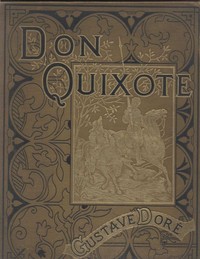
Don Quixote — Inside the Classic
Adventure Picaresque Fiction
435,116 recorded words. 490 minutes difference from this book's estimate.
View Gutenberg source #996

The source record for The Adventures of Peregrine Pickle — Key Ideas to Explore measures this digital text at 322,456 words, 23 hr 22 min estimated reading time, and 35 detected text sections.
The text analysis averages about 43.4 words per sentence, while the detected sections provide another way to judge how the source is divided.
Project Gutenberg metadata also associates the work with “Fiction,” connecting these edition facts with the source record’s subject description.
Explore this collection
These alternatives are selected using recorded categories and estimated reading time.
About 1,892 minutes
Adventure Picaresque Fiction
435,116 recorded words. 490 minutes difference from this book's estimate.
View Gutenberg source #996About 351 minutes
Adventure Picaresque Fiction
80,669 recorded words. 1051 minutes difference from this book's estimate.
View Gutenberg source #62072About 349 minutes
Adventure Picaresque Fiction
80,245 recorded words. 1053 minutes difference from this book's estimate.
View Gutenberg source #1154Search stored excerpts and compare books → Choose by your preferences →
Choices use stored catalog measurements. Estimates vary with reading speed. A shared category is a catalog label, not a claim that two books have the same argument or literary quality.
Search reads excerpt text stored with this catalog and links to its associated Gutenberg record. The connection is stored in the site database; this tool does not recheck that every excerpt is word-for-word identical to that external record. Excerpt search does not cover every chapter and does not verify historical publication dates.
Catalog snapshot checked: 2026-09-25. Coverage: 95 public books, 95 available source excerpts.
Read the complete public-domain text at its original source.
Read on Project GutenbergThe novel begins with a mock-heroic genealogy: Gamaliel Pickle, a merchant's son, is introduced with a simile comparing his father's rise to that of Rome, yet the tone undercuts the grandeur with a precise, almost petty financial detail—the father died before his fortune reached “a plum.” This blend of elevated diction and bathetic specificity sets the pattern for Smollett's narrative voice, which shifts between ironic detachment and sudden intimacy. In later excerpts, the same narrator who coolly dissects Peregrine's social climbing—his name-dropping of dukes and earls—also renders the hero's courtship of Emilia with a psychological closeness that borders on the novelistic. The prose accelerates during the carriage scene, where Peregrine's “artillery of sighs, vows, prayers, and tears” clashes with Emilia's calculated reserve, creating a tension between the picaresque's episodic rush and the emerging novel of manners.
The first chapter establishes a narrator who treats his subject with a mixture of gravity and mockery. Gamaliel Pickle is introduced with a classical flourish—his father's rise “like Rome, from small beginnings”—but the comparison is immediately deflated by the father's obsessive pursuit of a fortune that falls short of “a plum.” The narrator's voice here is archly omniscient, reporting the father's deathbed injunction with a straight face while the reader senses the absurdity of the mercantile ambition. This ironic distance persists throughout the excerpts: when Peregrine later boasts of his acquaintance with the Duke of G—, the narrator notes that “abundance of young men… make free with the names, though they have never had access to the persons of the nobility,” a dry observation that undercuts the hero's pretensions without moralizing. The effect is a narrative stance that oscillates between complicity and critique, inviting the reader to enjoy the satire while remaining aware of the author's control.
The excerpts reveal a marked change in narrative tempo between the generalized satire of Peregrine's social climbing and the specific, tense courtship with Emilia. In the earlier passage, the prose moves briskly through a catalogue of Peregrine's name-dropping, with short clauses and a cumulative rhythm that mimics the hero's restless ambition. But when the scene shifts to the carriage ride from the opera, the pace slows. Smollett lingers on Peregrine's “passionate expressions of love,” his squeezing of Emilia's hand, and her “prudence and resolution sufficient to contain her tenderness.” The narrator enters Emilia's consciousness, noting her fear of being mistaken, and the dialogue becomes a psychological duel. This deceleration is not merely a change of subject; it signals a different mode of storytelling, one that anticipates the novel of sensibility. The reader is left to wonder whether the picaresque momentum will reassert itself or whether this interiority will deepen.
Smollett's narrator maintains an inconsistent distance from his hero, which complicates any simple moral reading. In the social-climbing passage, the narrator stands apart, exposing Peregrine's “ridiculous ostentation” with clinical irony. Yet in the courtship scene, the narrator aligns closely with Peregrine's perspective, reporting his “transports” and “imprecations” without overt judgment. When Peregrine proposes a tavern supper, Emilia is “offended at the freedom,” but the narrator does not endorse her reaction; instead, he notes that she treated it as a joke. This ambiguity extends to the hero's own self-awareness: Peregrine swears he would never injure innocence, yet the narrator hints that his passion “overshot his purpose.” The reader is left to gauge the sincerity of his vows. The narrative voice thus refuses to settle into a consistent moral stance, forcing the reader to navigate between irony and sympathy—a hallmark of Smollett's picaresque method.
Readers attentive to narrative voice will find that Smollett's shifts in pace and distance are not arbitrary but deliberate strategies for balancing satire with psychological depth. The opening's mock-heroic irony gives way to a more novelistic intimacy in the courtship scenes, yet the narrator never fully commits to either mode. This instability is the novel's engine: it keeps the hero both ridiculous and sympathetic, and the reader both amused and uncertain. Approach the text with an ear for these tonal shifts, and the picaresque journey becomes a study in narrative control.
I keep thinking about Peregrine's shifting confidence, how the narrator peers close at his blushes one moment and sweeps off into mock grandeur the next. It reminded me, strangely, of another path I wandered once, one where a girl’s ragged edges hide a similar loneliness behind her bravado. That quiet ache didn’t leave me. The cave girl — Themes and Context lingers like a half-remembered song.
A brief reflection can help important ideas stay with you longer.