About 321 minutes
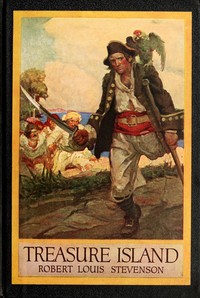
Treasure Island — A Closer Reading
Adventure Picaresque Fiction
73,685 recorded words. 13 minutes difference from this book's estimate.
View Gutenberg source #120

This digital edition of The Adventures of Gerard — Context and Discussion is described by source-level measurements including 70,780 words, 5 hr 8 min estimated reading time, and 8 detected text sections.
The text analysis averages about 17.2 words per sentence, while the detected sections provide another way to judge how the source is divided.
Project Gutenberg metadata also associates the work with “War stories, English,” connecting these edition facts with the source record’s subject description.
Explore this collection
These alternatives are selected using recorded categories and estimated reading time.
About 321 minutes
Adventure Picaresque Fiction
73,685 recorded words. 13 minutes difference from this book's estimate.
View Gutenberg source #120About 323 minutes
Adventure Picaresque Fiction
74,090 recorded words. 15 minutes difference from this book's estimate.
View Gutenberg source #69191About 269 minutes
Adventure Picaresque Fiction
61,792 recorded words. 39 minutes difference from this book's estimate.
View Gutenberg source #68939Search stored excerpts and compare books → Choose by your preferences →
Choices use stored catalog measurements. Estimates vary with reading speed. A shared category is a catalog label, not a claim that two books have the same argument or literary quality.
Search reads excerpt text stored with this catalog and links to its associated Gutenberg record. The connection is stored in the site database; this tool does not recheck that every excerpt is word-for-word identical to that external record. Excerpt search does not cover every chapter and does not verify historical publication dates.
Catalog snapshot checked: 2026-09-25. Coverage: 95 public books, 95 available source excerpts.
Read the complete public-domain text at its original source.
Read on Project GutenbergThe Brigadier Gerard stories are narrated by a man who describes himself as leading his hussars into cities as a conqueror, yet the first tale opens with him losing an ear. That contrast—between grand self-regard and comic mishap—runs through every episode. Doyle built these tales on a foundation of real Napoleonic memoirs, naming Marbot, Coignet, and Bourgoyne in his preface as sources for the military atmosphere. The result is a voice that sounds historically plausible while remaining entirely fictional: Gerard speaks of his 'little fighting devils' with affection, but his adventures repeatedly undercut his own dignity. The excerpts show him interrupting a marital quarrel, being dismissed with 'go to blazes,' and then learning the lady is married—a situation that traps his code of honour between chivalry and absurdity.
Doyle's preface lists half a dozen French military memoirs he used to create an authentic Napoleonic soldier's perspective. He singles out Marbot's reminiscences as 'pre-eminent' and notes that cavalry officers were particularly good at writing their experiences. The stories are not adaptations of those memoirs but original fictions that adopt their tone: the narrator's confidence, his attention to regimental pride, and his habit of explaining his own bravery. The epigraph—'He was brave but with that grain of folly in his bravery which the French love'—signals the balance Doyle aimed for. Gerard's voice mixes technical cavalry jargon with theatrical self-praise, and the excerpts show him offering to fight a duel for a lady's honour even after being told to 'go to blazes.' That blend of formality and farce is the book's consistent method.
The excerpt from the English adventure (Chapter V) shows Gerard repeatedly trying to intervene in a private quarrel, only to be ignored. The lady and her husband 'did not mind me any more than if I had been a fly who buzzed between them.' That deflation is typical: Gerard's heroic self-image collides with situations where he is peripheral or ridiculous. He offers to 'arrange that he shall never trouble you again,' but is bound by a promise not to act. The story then pivots to a kidnapping, giving him a chance to act—but the pattern of interrupted heroism persists. In the first chapter he loses an ear; in the Saragossa episode he is captured; at Waterloo he bears himself with courage but the battle is lost. The book's humour depends on the gap between Gerard's narration and what actually happens to him.
The contents list shows eight adventures spread across the Napoleonic wars: Spain, England, Russia, Waterloo. The excerpts give only glimpses of Venice ('ill-built and ridiculous') and rural England, but the range is wide. Doyle uses each setting to test Gerard's code in different conditions. In England he faces a domestic drama with a husband and wife; in Russia ('How the Brigadier Rode to Minsk') the retreat from Moscow provides a harsh backdrop. The preface mentions Spanish campaigns seen by hussars, dragoons, and cuirassiers, suggesting that Gerard's perspective shifts with each story's terrain. The book does not follow a single campaign but jumps between theatres, keeping the focus on the narrator's character rather than on military history. The settings are backdrops for his voice, not detailed historical reconstructions.
Readers coming to these stories from Sherlock Holmes will find a very different kind of narrator: Gerard tells his own tale, and his unreliability is part of the entertainment. The book rewards attention to small details—the way he describes his uniform, his reaction to being ignored, his precise sense of honour. Because each chapter is a complete episode, the collection can be read in any order, though the adventures gain cumulative effect as Gerard's self-portrait builds. The preface offers a useful starting point, naming the memoirs that inspired Doyle, but the stories themselves stand alone as comic adventure fiction.
Years among the stacks taught me that The Adventures of Gerard holds a certain tender foolishness—a soldier's bravado covering deeper loyalty. I find that same quiet heartbeat in The Battle of the Bells — Inside the Classic, where noise gives way to something whispered. Both remember that glory often wears a human, hesitant face.
Save your reaction, strongest insight, and memorable passage.