About 349 minutes
The Voyages of Doctor Dolittle — A Reader’s Guide
Adventure Picaresque Fiction
80,245 recorded words. 2 minutes difference from this book's estimate.
View Gutenberg source #1154
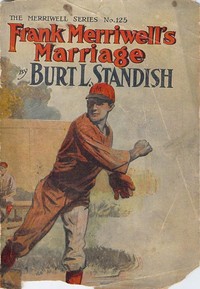
The catalog record for Frank Merriwell's Marriage; Or, Inza's Happiest Day — Reading Companion provides practical reading context through 80,669 words, 5 hr 51 min estimated reading time, and 43 detected text sections.
The text analysis averages about 11.1 words per sentence, while the detected sections provide another way to judge how the source is divided.
Project Gutenberg metadata also associates the work with “Baseball -- Juvenile fiction,” connecting these edition facts with the source record’s subject description.
Explore this collection
These alternatives are selected using recorded categories and estimated reading time.
About 349 minutes
Adventure Picaresque Fiction
80,245 recorded words. 2 minutes difference from this book's estimate.
View Gutenberg source #1154About 323 minutes
Adventure Picaresque Fiction
74,090 recorded words. 28 minutes difference from this book's estimate.
View Gutenberg source #69191About 321 minutes
Adventure Picaresque Fiction
73,685 recorded words. 30 minutes difference from this book's estimate.
View Gutenberg source #120Search stored excerpts and compare books → Choose by your preferences →
Choices use stored catalog measurements. Estimates vary with reading speed. A shared category is a catalog label, not a claim that two books have the same argument or literary quality.
Search reads excerpt text stored with this catalog and links to its associated Gutenberg record. The connection is stored in the site database; this tool does not recheck that every excerpt is word-for-word identical to that external record. Excerpt search does not cover every chapter and does not verify historical publication dates.
Catalog snapshot checked: 2026-09-25. Coverage: 95 public books, 95 available source excerpts.
Read the complete public-domain text at its original source.
Read on Project GutenbergThe narrative of Frank Merriwell's Marriage; Or, Inza's Happiest Day moves rapidly between athletic fields, club alleys, and domestic interiors, with each shift in setting marking a change in tension. The opening chapter places the reader at Eagle Heights, but the action quickly migrates to a club alley, a golf course, and a lacrosse field, where the physicality of sport mirrors emotional conflicts. The structure relies on a sequence of competitive events—baseball, golf, lacrosse—each serving as a stage for rivalry and personal stakes.
The book's chapters are organized around a series of athletic contests: a high jump, a baseball game, a lacrosse match, and a golf outing. These events are not mere diversions; they drive the plot forward and reveal character. For instance, the lacrosse game between Hopkins and Harvard is described in granular detail, with the injured Fred Fillmore watching from the sidelines, his bitterness growing as Onslaw scores. The game's outcome—a last-minute Harvard victory—triggers Fillmore's vow of revenge, a thread that resurfaces later. Each contest has a clear beginning, middle, and end, and the narrative lingers on the physical action—the ball's trajectory, the players' movements—before cutting away to the emotional aftermath.
Physical injury recurs as a motif, often linked to emotional pain. Fillmore's hip injury during the lacrosse game is described in clinical detail: he “fell over on his side and lay twisting on the ground,” then later watches from a blanket, his mental anguish “driv[ing] the blood from his face.” Similarly, other characters suffer falls, strains, and bruises, each incident momentarily halting the action and shifting focus to the character's inner state. The pattern of injury, recovery, and return to competition creates a rhythm of setback and resilience, though the excerpts do not reveal whether all recover fully.
The narrative alternates between crowded public venues—the lacrosse field, the baseball diamond, the club alley—and private, enclosed spaces like the road house or the old home. This movement underscores the contrast between performance and intimacy. The wedding, titled “Inza's Happiest Day,” presumably takes place in a domestic or religious setting, but the path to it is paved with public triumphs and humiliations. The road house scene (Chapter XXIII) and the Pimlico Road episode (Chapter XXII) suggest a shift to clandestine or leisure spaces, where schemes are hatched away from the crowd's gaze.
The title promises a marriage, and the final chapter is titled “The Wedding,” but the excerpts do not reveal the ceremony itself. Instead, the narrative builds toward this event through a series of obstacles: athletic defeats, jealousies, and confrontations. The structure implies that the wedding is both a resolution and a reward, but the journey there is fraught with competition. The book's 43 text sections and 80,000-plus words suggest a leisurely approach, with the wedding arriving only after extensive detours through sports and intrigue.
Readers approaching Frank Merriwell's Marriage should attend to how the athletic set pieces function as turning points, each altering the balance of rivalry and affection. The recurring imagery of injury and recovery, and the constant shuttling between public spectacle and private retreat, give the novel a kinetic energy that propels the story toward its titular event.
There’s something tender about watching Frank finally slow down long enough for the wedding, all those rivalries and races melting into a quiet “I do.” I felt that same wistfulness in The Adventures of Gerard — Context and Discussion, where bravado gives way to something softer. Some stories just know when to stop running.
Answer a few questions and save a private reflection on this device.