About 323 minutes
The cave girl — Themes and Context
Adventure Picaresque Fiction
74,090 recorded words. 2 minutes difference from this book's estimate.
View Gutenberg source #69191
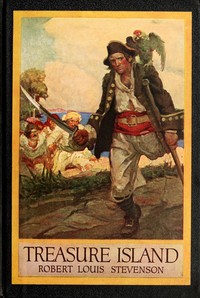
Before opening Treasure Island — A Closer Reading, the edition data offers a quick orientation: 73,685 words, 5 hr 21 min estimated reading time, and 36 detected text sections.
The text analysis averages about 19.2 words per sentence, while the detected sections provide another way to judge how the source is divided.
Project Gutenberg metadata also associates the work with “Sea stories,” connecting these edition facts with the source record’s subject description.
Explore this collection
These alternatives are selected using recorded categories and estimated reading time.
About 323 minutes
Adventure Picaresque Fiction
74,090 recorded words. 2 minutes difference from this book's estimate.
View Gutenberg source #69191About 308 minutes
Adventure Picaresque Fiction
70,780 recorded words. 13 minutes difference from this book's estimate.
View Gutenberg source #1644About 349 minutes
Adventure Picaresque Fiction
80,245 recorded words. 28 minutes difference from this book's estimate.
View Gutenberg source #1154Search stored excerpts and compare books → Choose by your preferences →
Choices use stored catalog measurements. Estimates vary with reading speed. A shared category is a catalog label, not a claim that two books have the same argument or literary quality.
Search reads excerpt text stored with this catalog and links to its associated Gutenberg record. The connection is stored in the site database; this tool does not recheck that every excerpt is word-for-word identical to that external record. Excerpt search does not cover every chapter and does not verify historical publication dates.
Catalog snapshot checked: 2026-09-25. Coverage: 95 public books, 95 available source excerpts.
Read the complete public-domain text at its original source.
Read on Project GutenbergFrom its opening sentence, Treasure Island establishes a narrator who is both participant and chronicler: Jim Hawkins writes at the request of Squire Trelawney, Dr. Livesey, and others, promising to keep back nothing but the island's bearings. This framing device immediately signals that the story is a retrospective account, shaped by memory and selective disclosure. The first chapters introduce the brown old seaman with a sabre cut, whose arrival at the Admiral Benbow inn sets in motion a chain of events involving a sea-chest, a black spot, and a map. Stevenson's prose is economical yet vivid, using concrete details—tarry pigtail, broken nails, a dirty livid scar—to build atmosphere without excess.
The novel's structure is more intricate than a simple adventure tale. After Part One, the narration splits: Dr. Livesey takes over for three chapters (XVI–XVIII), describing the abandonment of the ship and the first day's fighting. This shift is not merely a technical device; it changes the reader's perspective. The doctor's voice is more clinical and measured than Jim's, offering a different angle on the same events. When the narrative returns to Jim, he has grown bolder, yet his judgments remain those of a boy. The contrast between the two narrators creates a layered understanding of the action—what Jim sees in the heat of the moment versus what the doctor later interprets. This technique prevents any single viewpoint from dominating, encouraging readers to weigh evidence themselves.
Stevenson grounds the fantastical treasure hunt in a physically oppressive setting. The log-house stockade is built from unsquared pine trunks, with a ship's kettle sunk in the sand as a spring basin. Sand pervades everything: 'sand in our eyes, sand in our teeth, sand in our suppers.' The chimney is a hole in the roof, and smoke eddies inside, making the defenders cough and weep. These details are not decorative; they create a sense of constant discomfort and vulnerability. Against this gritty backdrop, Captain Smollett imposes order—dividing watches, assigning tasks, digging a grave for Tom Redruth. The doctor's comment that Smollett 'is a better man than I am' underscores the captain's role as a steadying force amid chaos. The physical environment mirrors the moral ambiguity: the island is both a place of potential wealth and a site of deprivation.
Though the excerpts do not include Silver's full introduction, his presence is felt through the doctor's conversation with Jim. When Jim expresses doubt about Ben Gunn's sanity, the doctor replies, 'If there's any doubt about the matter, he is.' This exchange reveals a pragmatic view of human nature under extreme conditions. The doctor carries Parmesan cheese in his snuff-box for Ben Gunn—a small, specific detail that suggests both foresight and a willingness to negotiate with the island's outcasts. Silver himself is never directly described in these passages, but the narrative's careful attention to motives and alliances hints at a character who operates in moral gray areas. The story does not present a simple division between heroes and villains; instead, it invites readers to question who can be trusted and what sanity means on a lawless island.
Readers approaching Treasure Island should attend to the gaps between what Jim tells us and what other characters reveal. The novel rewards attention to small details—the cheese, the ship's kettle, the shifting narrators—that build a world where survival depends on observation and adaptability. Stevenson's language is precise and often understated, leaving much to inference. This edition includes Louis Rhead's illustrations, which complement the text's visual imagination without overriding it.
Reading Jim’s quiet terror on the Hispaniola, I remembered my own childhood map—a crayon drawing of a creek I called “Dead Man’s Cove.” I found that same thrill, that ache of imagined gold, in the pages of Frank Merriwell's Marriage; Or, Inza's Happiest Day — Reading Companion, where loyalty simply glowed like a lantern in the dark, steady and patient.
Use these questions to collect your thoughts before moving on.