About 36 minutes
The Battle of the Bells — Inside the Classic
Adventure Picaresque Fiction
8,205 recorded words. 2 minutes difference from this book's estimate.
View Gutenberg source #66393
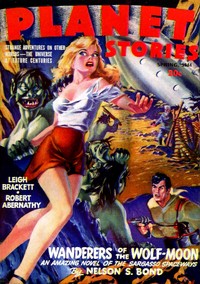
This digital edition of The Monster Maker — Reading Companion is described by source-level measurements including 8,633 words, 38 min estimated reading time, and 1 detected text section.
The text analysis averages about 12.1 words per sentence, while the detected sections provide another way to judge how the source is divided.
Project Gutenberg metadata also associates the work with “Science fiction,” connecting these edition facts with the source record’s subject description.
Explore this collection
These alternatives are selected using recorded categories and estimated reading time.
About 36 minutes
Adventure Picaresque Fiction
8,205 recorded words. 2 minutes difference from this book's estimate.
View Gutenberg source #66393About 55 minutes
Adventure Picaresque Fiction
12,476 recorded words. 17 minutes difference from this book's estimate.
View Gutenberg source #73233About 88 minutes
Adventure Picaresque Fiction
20,092 recorded words. 50 minutes difference from this book's estimate.
View Gutenberg source #62416Search stored excerpts and compare books → Choose by your preferences →
Choices use stored catalog measurements. Estimates vary with reading speed. A shared category is a catalog label, not a claim that two books have the same argument or literary quality.
Search reads excerpt text stored with this catalog and links to its associated Gutenberg record. The connection is stored in the site database; this tool does not recheck that every excerpt is word-for-word identical to that external record. Excerpt search does not cover every chapter and does not verify historical publication dates.
Catalog snapshot checked: 2026-09-25. Coverage: 95 public books, 95 available source excerpts.
Read the complete public-domain text at its original source.
Read on Project GutenbergFrom its opening line—"Get Gunther," the official orders read—Ray Bradbury's 1944 story immediately signals a collision between bureaucratic command and chaotic reality. The protagonists, Click Hathaway and Irish Marnagan, are marooned on an asteroid with only a gun and a newsreel camera. But the camera is not a passive prop; it drives the narrative. Hathaway thinks in terms of shots and fade-outs, even as a meteor strike sends the ship spinning. The story's voice is lean, percussive, and laced with dark humor: Marnagan declares he'll die when he's ready, and Hathaway worries about missing the best scene of his life. This is not a straightforward space opera; it is a tale about framing, performance, and the gap between action and its recording.
Bradbury gives Hathaway's camera an almost physical presence. It is "loaded" and "rack-spin[ning] film between his fingers" during the meteor strike. Hathaway clings to it, gritting his teeth, even as he is hurled against a lever-bank. The camera is not just a tool; it is a survival instinct. Later, Hathaway bluffs a guard by claiming he has "a weapon stronger than yours"—his camera. He threatens to "blast you and the whole damned wall" with a shot that will "go down in film history." The bluff works, but it also reveals the story's central conceit: that recording an event can be as potent as the event itself. The camera becomes a psychological weapon, and the narrative repeatedly cuts between action and its imagined cinematic replay.
The dialogue between Hathaway and Marnagan is rapid-fire, full of wisecracks that mask fear. When the ship is crashing, Hathaway asks if this is where "the Big Producer yells CUT!" Marnagan retorts, "I'll die when I'm damned good and ready." Later, when Hathaway proposes staging a fake raid, Marnagan quips, "You breathing oxygen or whiskey?" This banter does not undercut the danger; it heightens it. The characters use humor as a pressure valve, and their voices are distinct—Hathaway the showman, Marnagan the gruff pragmatist. The story's tone owes as much to hardboiled crime fiction as to pulp science fiction, a blend that keeps the action taut and the characters vivid.
The asteroid is described as a "honey-comb fortress" with six streets and a "wide, green-lawned Plaza." It is a deliberately artificial environment, a stage set for the final confrontation. Bradbury uses the setting to reinforce the story's theatricality: the pirates' base is a hollowed-out rock, and the telepathic monster-projector is a "great bank of intricate, glittering machine" that translates film into thought-emanations. The climax hinges on Hathaway's plan to "stage everything on the most colossal raid of the century," using the projector to create illusions. The structure mirrors a film shoot: setup, action, and a final scene where Hathaway walks across the Plaza "as if he owned it." The excerpts end before the resolution, but the pattern is clear—the asteroid is not just a location but a soundstage.
The catalog lists "Science fiction," "Short stories," "Adventure stories," "Asteroids -- Fiction," and "Space pirates -- Fiction." These are accurate but incomplete. The excerpts show that the story is less about space piracy than about cinematic technique and psychological warfare. The pirate Gunther is almost an afterthought; the real conflict is between Hathaway's camera and the pirates' illusions. The story's humor and self-awareness push it beyond typical adventure fiction. Readers expecting a straightforward space pirate tale will find instead a metafictional twist: a story about making a story, where the hero's weapon is his ability to frame reality.
The excerpts break off as Hathaway confronts Gunther, leaving the outcome uncertain. But the story's interest lies less in who wins than in how the victory is staged. Bradbury's prose is lean, his dialogue sharp, and his conceit—a cameraman who treats a life-or-death mission as a film shoot—gives the tale a distinctive edge. Readers should pay attention to the interplay between action and its recording; the camera is never just a prop. This is a story that knows it is a story, and it revels in that knowledge.
There’s something about that old Bradbury tale—the camera as a bluff, the pirate undone by what he thinks is being filmed—that lingers like a half-remembered matinee. It made me think of The women novelists — Edition Insights, which I stumbled on last winter. They both capture how we perform for unseen eyes, and how much we give away in the trying.
Build a private reading journal entry for this title.