About 38 minutes
The Monster Maker — Reading Companion
Adventure Picaresque Fiction
8,633 recorded words. 2 minutes difference from this book's estimate.
View Gutenberg source #62569
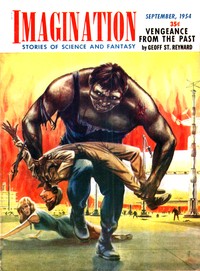
This digital edition of The Battle of the Bells — Inside the Classic is described by source-level measurements including 8,205 words, 36 min estimated reading time, and 1 detected text section.
The text analysis averages about 16.1 words per sentence, while the detected sections provide another way to judge how the source is divided.
Project Gutenberg metadata also associates the work with “Short stories,” connecting these edition facts with the source record’s subject description.
Explore this collection
These alternatives are selected using recorded categories and estimated reading time.
About 38 minutes
Adventure Picaresque Fiction
8,633 recorded words. 2 minutes difference from this book's estimate.
View Gutenberg source #62569About 55 minutes
Adventure Picaresque Fiction
12,476 recorded words. 19 minutes difference from this book's estimate.
View Gutenberg source #73233About 88 minutes
Adventure Picaresque Fiction
20,092 recorded words. 52 minutes difference from this book's estimate.
View Gutenberg source #62416Search stored excerpts and compare books → Choose by your preferences →
Choices use stored catalog measurements. Estimates vary with reading speed. A shared category is a catalog label, not a claim that two books have the same argument or literary quality.
Search reads excerpt text stored with this catalog and links to its associated Gutenberg record. The connection is stored in the site database; this tool does not recheck that every excerpt is word-for-word identical to that external record. Excerpt search does not cover every chapter and does not verify historical publication dates.
Catalog snapshot checked: 2026-09-25. Coverage: 95 public books, 95 available source excerpts.
Read the complete public-domain text at its original source.
Read on Project GutenbergThe story opens with a precise, almost anthropological description of a small-town prank: Charley Mason's outhouse, painted white with a red roof, bears a sign reading "PUBLIC RESTROOM" and a chain that triggers a cowbell when pulled. The narrator notes that the joke works only on city folk, in daytime, and that the chain "coming up through the roof" is so unlikely in context that it catches victims off guard. This careful setup—grounded in the geography of Owensville, Pennsylvania, and the rhythms of rural life—gives the tale a folksy, anecdotal texture before it takes a sharp turn into the metaphysical.
The prank's success rate—"once or twice a week"—is presented as a matter of precise conditions: the right time of day, the right kind of traveler, the right level of thoughtlessness. The narrator's voice is wry and knowing, describing how victims emerge "looking puzzled and kind of sneaky." This tone persists even as the story escalates. The cowbell itself becomes a character: it goes "Blongle, blongle, blok!" and is mounted on an angle-iron. The physical details—the chain, the roof, the mounting—are rendered with the same care as the later supernatural elements, creating a seamless bridge between the mundane and the cosmic.
The central confrontation is staged as a debate between a young man in an "impeccable" white suit and a man in black who "smoked and smirked." Their dialogue is formal, almost philosophical: "Tiny building blocks may build a great edifice," says the angel; "The removal of one may contribute to its ruin," replies the devil. The setting becomes timeless—"the sun still stood high as a result of timelessness"—and the outhouse is reimagined as "a battleground of good and evil." The angel's key speech warns that evil requires only "your acceptance of him, your tolerance, your passivity, your apathy," while good demands active effort. This explicit moral framing is delivered without irony, yet the story undercuts it with a final, sly detail.
After the angel departs, he looks into Charley Mason's mind and finds "a tiny, half-hidden thought" that almost makes him smile. The excerpt cuts off before revealing that thought, but the implication is clear: Charley, despite witnessing a cosmic battle, is already planning to keep the bell or rebuild it. This ending reframes the entire story as a comedy of human stubbornness. The angel's earnest sermon about conquering evil in one's own soul is met with a silent, practical joke of his own. The reader is left to wonder whether the lesson took hold—or whether the prankster's instinct is itself a form of the very apathy the angel warned against.
Readers should attend to the story's tonal shifts: the opening's deadpan humor, the debate's solemnity, and the final, withheld punchline. The cowbell is both a literal object and a symbol of temptation, but Bixby never lets the allegory overwhelm the narrative's concrete, place-based details. The story rewards attention to its small, precise observations—the creek murmuring, the bird falling silent, the crescent door seeming to mock—as much as to its larger theological argument.
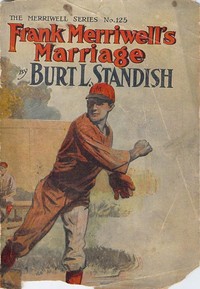
I’ve always found it curious how The Battle of the Bells lets mischief grow into something almost holy, two contrary forces trading quiet truths above an outhouse. It reminds me of an older, gentler story, Frank Merriwell's Marriage; Or, Inza's Happiest Day — Reading Companion, where good and mischief also share a fence, and both sides end up smiling. That kinship stays with me.
Answer a few questions and save a private reflection on this device.