About 38 minutes
The Monster Maker — Reading Companion
Adventure Picaresque Fiction
8,633 recorded words. 17 minutes difference from this book's estimate.
View Gutenberg source #62569
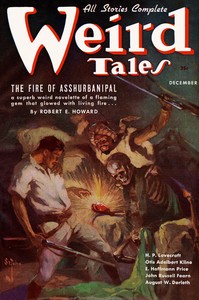
The source record for The haunter of the dark — Edition Insights measures this digital text at 12,476 words, 55 min estimated reading time, and 2 detected text sections.
The text analysis averages about 23.6 words per sentence, while the detected sections provide another way to judge how the source is divided.
Project Gutenberg metadata also associates the work with “Horror tales,” connecting these edition facts with the source record’s subject description.
Explore this collection
These alternatives are selected using recorded categories and estimated reading time.
About 38 minutes
Adventure Picaresque Fiction
8,633 recorded words. 17 minutes difference from this book's estimate.
View Gutenberg source #62569About 36 minutes
Adventure Picaresque Fiction
8,205 recorded words. 19 minutes difference from this book's estimate.
View Gutenberg source #66393About 88 minutes
Adventure Picaresque Fiction
20,092 recorded words. 33 minutes difference from this book's estimate.
View Gutenberg source #62416Search stored excerpts and compare books → Choose by your preferences →
Choices use stored catalog measurements. Estimates vary with reading speed. A shared category is a catalog label, not a claim that two books have the same argument or literary quality.
Search reads excerpt text stored with this catalog and links to its associated Gutenberg record. The connection is stored in the site database; this tool does not recheck that every excerpt is word-for-word identical to that external record. Excerpt search does not cover every chapter and does not verify historical publication dates.
Catalog snapshot checked: 2026-09-25. Coverage: 95 public books, 95 available source excerpts.
Read the complete public-domain text at its original source.
Read on Project GutenbergLovecraft opens 'The Haunter of the Dark' with a skeptical frame: the narrator proposes that Robert Blake was killed by lightning or nervous shock, not by anything supernatural. This cautious voice immediately clashes with the diary entries that follow, creating a tension between rational explanation and the inexplicable. The story’s structure—alternating between third-person summary and Blake’s first-person diary—allows Lovecraft to present evidence while questioning its reliability. The diary itself is a fragmented record, often interrupted by newspaper clippings and local rumors, which together build a mosaic of terror centered on the abandoned church on Federal Hill.
The narrative is bookended by a skeptical introduction and a brief closing that mentions the disposal of the stone and metal box. Within this frame, Blake’s diary entries form the core. Lovecraft uses the diary to convey immediate, subjective horror—Blake’s growing obsession with the Shining Trapezohedron and the entity it summons. The diary’s entries are dated, giving a sense of escalating dread. Yet the frame narrator undercuts this by suggesting Blake’s imagination was inflamed by local superstitions. This dual perspective forces readers to weigh evidence: the diary’s vivid descriptions against the narrator’s rationalizing tone. The structure thus mirrors the story’s central conflict between belief and skepticism.
Darkness is not merely absence of light but a tangible, malevolent presence. The entity in the steeple can only move in darkness; light forces it to retreat. This is literalized in the scene where a thunderstorm knocks out the city’s lighting, and the thing descends into the church. The Italians guard the church with candles and lamps, creating a ‘guard of light.’ Blake’s diary records a ‘morbid longing’ to visit the tower and gaze again at the glowing stone—a stone that emits a faint light of its own. The contrast between natural light (sunlight, electric lamps) and the unnatural glow of the Trapezohedron underscores the cosmic horror: the entity is of a darkness that predates and outlasts human illumination.
The story shifts between several locations: Blake’s studio, the church exterior, the tower interior, and the city streets. Each movement is accompanied by a change in narrative distance. The opening frame is detached; the diary is intimate; the newspaper reports are clinical. Lovecraft uses these shifts to control the flow of information. For instance, the reporter’s discovery of the church interior—the plowed dust, bad odor, broken windows—is relayed in a flat, factual tone that contrasts with Blake’s horrified diary entry about the same event. This juxtaposition heightens the uncanny effect: the same event described in two registers, neither fully trustworthy. The movement from private diary to public newspaper also suggests the horror spreading beyond one individual.
The church on Federal Hill is not just a setting but a repository of past horrors. Lovecraft layers references: the Starry Wisdom sect that met there before 1877, the disappearance of reporter Edwin M. Lillibridge in 1893, and the current Italian residents’ fears. The building itself is described in terms of decay—grime-blackened windows, rotted cushions, dust—suggesting a place where time has stalled. The tower’s heptagonal stone pillar and bizarre plaster images hint at forgotten rituals. Blake’s diary mentions the metal box and skeleton, but the frame narrator notes these were not found by reporters, implying selective revelation. This accumulation of unexplained details—each fragment from a different era—creates a sense of depth, as if the church holds secrets that the narrative only partially uncovers.
Readers should attend to how Lovecraft withholds and parcels out information. The diary entries often trail off or skip days; the newspaper items are brief and dismissive. What is not said—the gaps in the record—is as important as what is stated. The story rewards attention to its structural choices: the frame that questions its own content, the recurring motif of light as both protection and lure, and the way each new piece of evidence complicates rather than clarifies the truth. The horror lies not in a single revelation but in the accumulating weight of ambiguous testimony.
Some nights I still think of Lovecraft’s diary slipping toward that church bell, each line a step into shadow. It reminds me of a work I keep near my desk, Juggernaut of Space — Themes and Context, where vastness presses close like a held breath. Both understand how silence can weigh more than any scream.
Answer a few questions and save a private reflection on this device.