About 88 minutes
Juggernaut of Space — Themes and Context
Adventure Picaresque Fiction
20,092 recorded words. 31 minutes difference from this book's estimate.
View Gutenberg source #62416
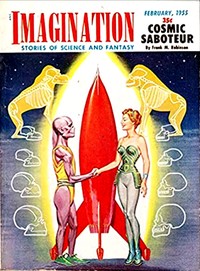
Cosmic Saboteur — Story, Setting & Ideas can be approached with a clearer sense of reading commitment from its source measurements: 27,257 words, 1 hr 59 min estimated reading time, and 3 detected text sections.
The text analysis averages about 11.8 words per sentence, while the detected sections provide another way to judge how the source is divided.
Project Gutenberg metadata also associates the work with “Science fiction,” connecting these edition facts with the source record’s subject description.
Explore this collection
These alternatives are selected using recorded categories and estimated reading time.
About 88 minutes
Adventure Picaresque Fiction
20,092 recorded words. 31 minutes difference from this book's estimate.
View Gutenberg source #62416About 156 minutes
Adventure Picaresque Fiction
35,680 recorded words. 37 minutes difference from this book's estimate.
View Gutenberg source #69323About 168 minutes
Adventure Picaresque Fiction
38,481 recorded words. 49 minutes difference from this book's estimate.
View Gutenberg source #59847Search stored excerpts and compare books → Choose by your preferences →
Choices use stored catalog measurements. Estimates vary with reading speed. A shared category is a catalog label, not a claim that two books have the same argument or literary quality.
Search reads excerpt text stored with this catalog and links to its associated Gutenberg record. The connection is stored in the site database; this tool does not recheck that every excerpt is word-for-word identical to that external record. Excerpt search does not cover every chapter and does not verify historical publication dates.
Catalog snapshot checked: 2026-09-25. Coverage: 95 public books, 95 available source excerpts.
Read the complete public-domain text at its original source.
Read on Project GutenbergThe story opens with a 17-year-old walking through Chicago's Polish district on a spring morning, only to be ambushed in an alley near the stockyards. The attack is described with visceral precision: knuckles splintering teeth, a hand buried wrist-deep in his stomach, and a systematic beating that reduces the world to a bloody haze. This opening establishes a pattern of sudden violence erupting in mundane settings—a technique Robinson repeats throughout the narrative.
The protagonist, later known as Stan Martin, is not merely a victim but a tool being reshaped. The indoctrination is physical first, psychological second. The alley scene, with its refuse piles and garbage cans, grounds the science-fiction premise in a gritty, recognizable urban landscape.
Robinson introduces a small gadget that looks like a light meter but functions as a radiation tracker. The device's light flickers, glows, and waxes as the protagonist approaches his target. This prop recurs across scenes, creating a consistent method of pursuit. The heat gun, unlimbered from a shoulder holster, is another recurring tool. These objects anchor the speculative elements in tactile detail.
The tracking device also serves a structural role: it dictates the movement between scenes. Stan follows its signal through office buildings, pausing at store windows to check the indicator. The reader follows the light's waxing and waning, anticipating the confrontation. This mechanical rhythm contrasts with the chaotic violence of the alley.
The narrative shifts between open streets and enclosed rooms. The alley is a transitional space—neither fully public nor private—where the protagonist is seized. Later, the action moves to an office building lobby, an elevator, a corridor, and finally a third-floor office. Each space is described with functional brevity: the elevator creeps slowly, the corridor is silent, the office has dust motes in sunlight.
Robinson uses these transitions to control pacing. The alley scene is frantic and claustrophobic; the office building sequence is measured and tense. The protagonist walks casually, stops to look in store windows, and pauses at landings to listen. The reader experiences the same spatial progression, from the chaos of the street to the stillness of the office where the antagonist waits.
Light appears in several forms: the spring morning's clean freshness, the bloody haze filling the protagonist's eyes, the stream of sunlight lancing through an office window, and the indicator's small light flickering. These images create a visual thread. The dust motes in the sunlight are described as perfectly still when Stan enters the office—a moment of suspended animation before confrontation.
Stillness contrasts with violence. The alley is all motion—knuckles, slats of wood, gasping breath. The office is heavy, quiet, with no sound in the corridor. This alternation between kinetic and static scenes shapes the story's rhythm. The final stillness of the dust motes signals that the chase has ended and a different kind of encounter is about to begin.
The excerpts show a third-person limited perspective that stays close to Stan's sensory experience. The reader sees the alley through tears of shock, hears the scream, feels the wrist-deep blow. Later, the point of view shifts slightly to include Caldwell's curiosity about the indicator, but the narrative remains anchored to Stan's actions and perceptions.
The dialogue is terse and functional. Stan's orders to Caldwell are clipped: “Let's go.” “You're paid for what you do, not for being curious.” The antagonist, Avis, speaks in a cold, measured tone. The voice of the narration itself is plain, favoring concrete nouns (knuckles, slat, indicator, heat gun) over abstract description. This spare style keeps the focus on physical action and spatial movement.
Readers attentive to the story's structure will notice how Robinson uses the tracking device as a narrative compass, guiding both character and reader through a series of enclosed spaces. The recurring images of light and stillness create a visual rhythm that punctuates the action. The excerpts offer only a partial view of the plot, but they reveal a writer who builds tension through precise, physical detail and careful control of movement between scenes.
I finished Cosmic Saboteur feeling the ache of a man who’d been handed a life he never chose, and it lingered like the Chicago fog. That restlessness reminded me of another wanderer, chasing windmills for reasons he couldn’t quite explain. There’s a quiet comfort in knowing both Stan and the knight were just looking for a place to belong. Don Quixote — Inside the Classic caught that same lonely, stubborn glow.
Your answers remain private and are stored only in this browser.