About 168 minutes
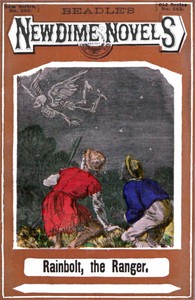
Rainbolt, the Ranger; or, The Aerial Demon of the Mountain — Reading Notes
Adventure Picaresque Fiction
38,481 recorded words. 12 minutes difference from this book's estimate.
View Gutenberg source #59847
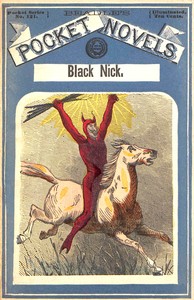
Before opening Black Nick, the hermit of the hills; or, The expiated crime A story of Burgoyne's surrender — Edition Insights, the edition data offers a quick orientation: 35,680 words, 2 hr 36 min estimated reading time, and 23 detected text sections.
The text analysis averages about 20.0 words per sentence, while the detected sections provide another way to judge how the source is divided.
Project Gutenberg metadata also associates the work with “Historical fiction,” connecting these edition facts with the source record’s subject description.
Explore this collection
These alternatives are selected using recorded categories and estimated reading time.
About 168 minutes
Adventure Picaresque Fiction
38,481 recorded words. 12 minutes difference from this book's estimate.
View Gutenberg source #59847About 119 minutes
Adventure Picaresque Fiction
27,257 recorded words. 37 minutes difference from this book's estimate.
View Gutenberg source #66540About 197 minutes
Adventure Picaresque Fiction
45,215 recorded words. 41 minutes difference from this book's estimate.
View Gutenberg source #558Search stored excerpts and compare books → Choose by your preferences →
Choices use stored catalog measurements. Estimates vary with reading speed. A shared category is a catalog label, not a claim that two books have the same argument or literary quality.
Search reads excerpt text stored with this catalog and links to its associated Gutenberg record. The connection is stored in the site database; this tool does not recheck that every excerpt is word-for-word identical to that external record. Excerpt search does not cover every chapter and does not verify historical publication dates.
Catalog snapshot checked: 2026-09-25. Coverage: 95 public books, 95 available source excerpts.
Read the complete public-domain text at its original source.
Read on Project GutenbergThe novel opens with a Mohawk war party halting at a forest spring, the sun setting in an "angry glow of crimson" that turns tree trunks black against the red sky. This visual pattern—sharp contrasts of light and dark, natural and painted—recurs throughout the excerpts, linking the wilderness to violence. The leader, Black Fox, speaks of a white chief who has not arrived, while the young Panther Cub scorns reliance on pale-faces. The scene establishes a layered authority: Mohawk elders, British allies, and the unseen hermit Black Nick, whose name titles the book but who does not appear in the opening chapters.
The first chapter, "The Wood Fiend," presents a compact drama of suspicion and leadership. The five Mohawks move single file, scanning the ground for tracks. Black Fox rebukes Panther Cub with a proverb: "Has the Black Fox lost his eyes, that Panther Cub thinks he is the only Mohawk that can see in the night?" The dialogue reveals internal tensions among the indigenous characters, who are not a monolithic force but individuals with differing views on the British alliance. The clearing by the spring functions as a stage where power is negotiated through speech and silence, not yet through violence. The setting—a natural clearing at sunset—is the first of several liminal spaces where characters meet across cultural lines.
Later, the hussar Adrian Schuyler leads a charge against Indians and Hessians. The excerpt shows a tactical sequence: he deploys his rangers as skirmishers, orders a feigned retreat to provoke a wild volley, then shouts "Halt! Face about!" and charges. The prose emphasizes motion and sound—bullets "tearing up the earth," horses fidgeting, the "thump, thump" of shots. Diana, a young woman, insists on riding with him, saying "I can ride too." Her presence adds a romantic complication but also a structural parallel to the Mohawk council: in both scenes, a female figure (Diana, and later the "Rock Nymph" of chapter III) enters a male-dominated space and asserts agency. The charge itself is described as a sudden reversal that exploits the enemy's fear of dragoons.
From the opening "angry glow of crimson" to the "dripping cloak" Adrian throws back, the novel uses color and texture to signal danger and transformation. The war-painted Mohawks, the black trunks against red sky, the "stolid dragoon sentries" in Hessian camp—these details create a visual code of opposition. The hermit Black Nick, though not yet met, is foreshadowed by the title and by the "wood fiend" epithet. The narrative moves between close-up dialogue and panoramic descriptions of the forest, the camp, and the battlefield. This oscillation between intimate and wide views mirrors the plot's shifts from personal loyalty (Adrian and Diana) to strategic maneuvering (the Mohawk council, the charge).
The book's twenty-one chapters alternate between British, American, and Mohawk perspectives. The excerpts show three distinct registers: the formal, slightly archaic speech of the Mohawk leaders; the clipped, tactical commands of Adrian; and the defiant, colloquial lines of Diana. Whittaker uses chapter titles as signposts—"The Wood Fiend," "The Rock Nymph," "The Demon's Haunt"—that label characters with supernatural or elemental names, yet the actual dialogue is grounded in practical concerns: tracking, charging, escaping. The structure does not follow a single protagonist; instead, it weaves together several threads that converge around Burgoyne's surrender. The reader must track multiple factions without a clear moral hierarchy.
Readers should attend to how Whittaker balances action set pieces with council scenes. The novel does not linger on interiority; motives are revealed through what characters say and do under pressure. The hermit of the title remains an enigma for much of the book, a figure invoked but not seen. Pay attention to the moments when the narrative pauses on a natural detail—a spring, a sunset, a cloak—as these often signal a shift in power or allegiance.
The rain kept up its soft drumming on the windows while Black Nick’s scarlet sunsets lingered behind my eyelids. Later, hunched over tea, I found myself thinking about how stories stitch themselves together from borrowed threads—war paint, cloaks, secrets. That quiet thread led me, almost by accident, to The women novelists — Edition Insights, where the same woven quality felt gentler, though no less mysterious.
Answer a few questions and save a private reflection on this device.